
Key Takeaways
- Eating enough comes first. During oral cancer treatment, getting enough calories, protein and fluids matters more than following a perfect diet. A well-fed body copes better with surgery, radiotherapy and chemotherapy.
- There is no single best diet for cancer patients. The right plan depends on the treatment you are having, how well you can chew and swallow, and your weight and strength.
- Texture matters as much as the food. Soft, moist foods are usually easier when the mouth is sore or dry. Spicy, hot, hard or sour foods often cause trouble.
- Food does not cure cancer. Diet supports your strength and recovery alongside medical treatment. It does not replace treatment, and no supplement or special food has been shown to treat oral cancer.
- Weight loss and swallowing problems need attention early. If you are losing weight, cannot drink enough or cough and choke while eating, tell your doctor or dietitian without waiting for the next visit.
- A dietitian can make this easier. What you can eat changes from week to week. A clinical dietitian and a speech and swallowing therapist can adjust the plan as treatment goes on.
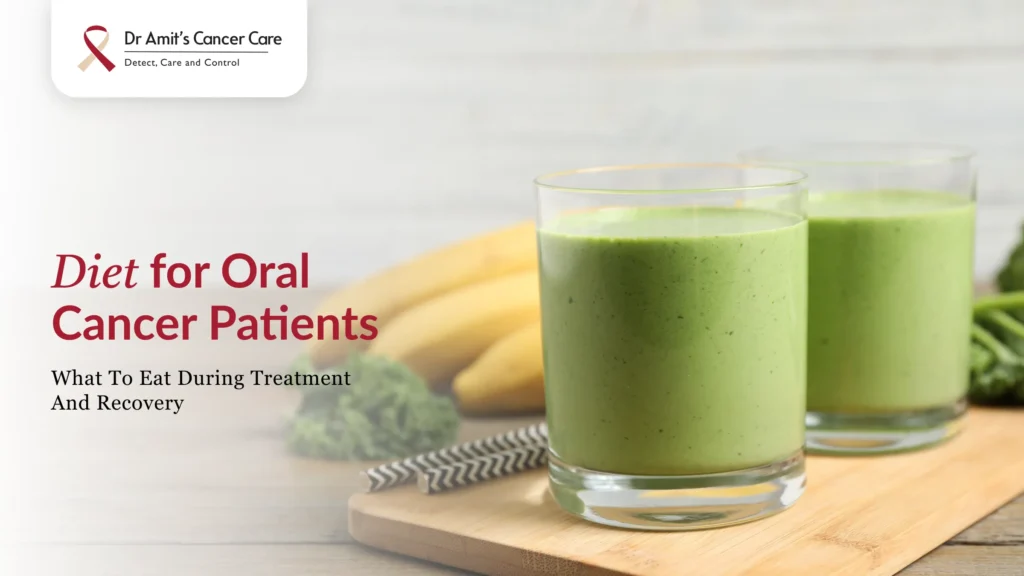
A good diet for oral cancer patients is one that gives you enough energy, protein and fluid in a form your mouth and throat can handle. In practice, that usually means soft, moist, nourishing food eaten in small portions through the day, and changed as treatment and healing change what you can manage.
Many people search for the best diet for cancer patients and hope for one list of right and wrong foods. There isn’t one. What helps most is eating regularly, keeping your weight steady and finding textures that do not hurt. This guide covers what to eat during treatment, what to be careful with, and how to eat well as you recover.
Have a question about eating during oral cancer treatment?
Why Eating Becomes Hard in Oral Cancer
Oral cancer can affect the tongue, gums, cheeks, jaw and floor of the mouth. These are the parts we use to chew and swallow. Treatment can add to the problem. Surgery may change how the mouth moves, radiotherapy often causes a sore mouth, dry mouth and a change in taste, and chemotherapy can bring nausea and tiredness.
All of this makes eating harder at the very time your body needs more fuel. Weight loss and poor nutrition are common in head and neck cancer, and they can affect strength, healing and how well treatment is tolerated (Arends et al., 2017; Talwar et al., 2016).
Most of these problems can be managed. Small changes in what you eat and how you eat it, along with early support, often make a real difference.
What Is the Best Diet for Cancer Patients?
There is no one best diet for cancer patients. No special food, juice or supplement has been proven to cure cancer or shrink a tumour. What guidelines do agree on is the basic goal which is to eat enough to keep your weight and muscle steady, get enough protein and stay hydrated (Muscaritoli et al., 2021).
For many adults, guidelines suggest roughly 25 to 30 calories per kilogram of body weight each day and at least 1 gram of protein per kilogram, sometimes up to 1.5 grams (Arends et al., 2017). Treat these as starting points. Your dietitian will adjust them for your weight, your treatment and how much you are able to eat.
| Note No food, juice or supplement has been shown to cure oral cancer. Nutrition is there to support your body through treatment, not to replace it. |
What to Eat During Oral Cancer Treatment
One should eat food that is soft, moist, high in protein and easy to swallow. Here is how that can look in everyday meals.
Protein foods
Protein helps your body repair tissue after surgery and radiotherapy, and it protects your muscle. Soft choices include scrambled or soft-boiled eggs, moong dal soup, mashed lentils, curd, buttermilk, paneer, and milk or milk-based shakes. Recommend fully cooked eggs, pasteurised milk and paneer, thoroughly washed fruit, and avoiding street food and improperly stored leftovers. If you eat fish or chicken, cook it until it is very tender, then shred it or blend it into a soup. Soya chunks softened in gravy work for some people too.
Energy-rich foods
If your appetite is small or you are losing weight, try adding calories without adding bulk. A spoon of ghee or butter stirred into khichdi, dal or porridge goes a long way. Full-fat milk and curd are better than the low-fat kinds for now. A little nut powder or nut butter blended into a shake adds energy and protein together or avoid it if it worsens dry mouth.
| Health Disclaimer Advise people with diabetes, kidney disease or heart disease to consult their dietitian before following recommendations involving ghee, full-fat dairy or high protein intake |
Soft grains
Khichdi, dalia, soft idli, upma, ragi or oats porridge and well-cooked rice with dal are gentle on a sore mouth. A chapati softened in dal or milk is often easier than a dry one.
Fruits and vegetables
Fruits and vegetables still matter for vitamins, minerals and fibre. When chewing is hard, blend or mash them into soups and smoothies. Banana, ripe papaya, melon and stewed apple are soft options, and vegetables can be cooked until they fall apart. Citrus fruit, tomato and pineapple can sting a sore mouth, so try a small amount first or choose a milder fruit.
Fluids
Dehydration can creep up during treatment. Sip water, coconut water, buttermilk, soups, milk and oral rehydration solution through the day. If plain water tastes odd, a few mint leaves or a slice of cucumber in the glass may help.
| Expert Insight “Many patients worry about which foods are right and forget the basics: eating enough and drinking enough. During treatment, a soft, protein-rich meal that you can actually swallow does more for you than a perfect diet you cannot manage.” Dr. Amit Chakraborty MBBS, MS, MCh (Surgical Oncology), MRCS (UK) Head & Neck Cancer Specialist Registered Medical Practitioner | 2008113798 |
Foods and Habits That Can Make Eating Harder
Every person reacts differently, but many people find the same few things uncomfortable during treatment. Very spicy food, very hot food and drinks, hard or crunchy items such as chips, toast and nuts, and very sour or acidic foods can irritate a sore mouth. Lukewarm or cool food is usually gentler. If your mouth is dry, sticky foods can cling and be hard to clear.
Tobacco in any form, including smoking, chewing tobacco, gutka and tobacco in paan, and alcohol irritate the mouth and are linked with oral cancer. They can also slow healing and make mouth sores worse during treatment. Your doctor can help you stop, and it is usually easier with support than on your own.
Common Eating Problems and What May Help
Different side effects need different fixes. The table below gives general tips, and your treating team can tell you what suits you.
| Problem | What may help |
| Mouth sores or pain | Choose soft, cool, bland foods. Avoid spicy, acidic or rough foods. Ask your doctor about pain relief before meals. |
| Dry mouth | Sip fluids often, add gravy or soup to meals and moisten food. Ask your team about saliva substitutes. |
| Change in taste | Try cold or room-temperature foods, mild herbs or a little lemon (if your mouth is not sore), and rinse your mouth before eating. |
| Trouble chewing or opening the mouth | Choose blended, mashed or pureed food. Ask about jaw exercises with a speech and swallowing therapist. |
| Difficulty swallowing | Follow the texture advice from your swallowing therapist. Do not push through foods that feel unsafe. |
| Nausea | Eat small meals more often. Plain, bland foods such as soft rice, banana or toast softened in milk. Ask about anti-nausea medicine. |
| Poor appetite | Eat little and often, every 2 to 3 hours, and use energy-rich foods and nourishing drinks. |
Eating After Oral Cancer Surgery
After surgery, your team will tell you when to start eating and what texture is safe. Some people begin with fluids and move to a soft diet. Others need a feeding tube for a while, especially after larger operations or when swallowing is not yet safe.
A feeding tube is simply a way to make sure you get enough nutrition while your mouth and throat heal. It does not mean that something has gone wrong. Many people use one for a short time and then go back to eating by mouth.
A speech and swallowing therapist can check how safely you swallow and help you build the skill back step by step.
Eating During Radiotherapy and Chemotherapy
Radiotherapy side effects tend to build up gradually. Mouth soreness, dry mouth and taste changes often start in the first couple of weeks and can last for some time after treatment ends. Small, frequent meals usually work better than three big ones, and soft, moist food or a nourishing drink is easier to manage than a heavy plate. Keeping your weight up early makes the later weeks easier.
| Chemotherapy can bring nausea, tiredness and a poor appetite. On those days, eat when you feel best instead of sticking to fixed meal times, and keep fluids going. |
Diet During Recovery
Once treatment ends, the mouth and throat can take weeks or even months to settle. Taste, saliva and swallowing usually improve slowly, and some changes may stay for longer. Keep protein in every meal while your strength comes back, and move to firmer foods only as your mouth allows. Fluids stay important because dry mouth can last well beyond the last session.
Radiotherapy can also affect the teeth and gums, so regular dental care matters during this period. As you feel stronger, aim for a balanced plate with plenty of vegetables, fruit, whole grains and protein, which matches general nutrition advice for cancer survivors (Sanft et al., 2022).
If swallowing gets worse again, or your weight keeps falling, mention it at your follow-up visit rather than waiting it out.
A Sample Day of Soft Meals
Here is one way a day of soft meals could look. It is only an example. A dietitian can adapt it to your appetite, your treatment and the food you grew up eating.
| Time | Example |
| Early morning | Warm (not hot) milk with a spoon of ground almonds |
| Breakfast | Soft upma or dalia with ghee, and a mashed banana |
| Mid-morning | Buttermilk or a fruit and curd smoothie |
| Lunch | Khichdi with dal and ghee, with mashed cooked vegetables |
| Evening | Moong dal soup or a soft egg preparation |
| Dinner | Chapati softened in dal, or rice with curd |
| Bedtime | A milk-based drink or a nourishing shake |
Sipping fluids between meals keeps the mouth moist and helps prevent dehydration.
Supplements, Herbal Remedies and “Cancer-Fighting” Foods
It is common to hear about turmeric, juices, herbal powders or special diets that are said to fight cancer. There is no reliable evidence that any food or supplement can cure oral cancer. Some products can interfere with chemotherapy or radiotherapy, or affect the liver and blood counts.
Before you start any supplement, herbal product or restrictive diet, check with your oncologist or dietitian. Nutrition drinks and supplements that were prescribed for you are different, and they can be very helpful when food alone is not enough.
| Note A diet that cuts out whole food groups is rarely a good idea during treatment, because your body needs the energy and protein. |
When to Talk to Your Care Team
Some trouble with eating is normal during oral cancer treatment. Most of it eases with small changes in food and routine. A few problems need a doctor’s attention sooner. If they carry on, they can lead to dehydration, weight loss or a chest infection.
| When to Get Medical Advice Talk to your doctor or dietitian if you are losing weight without trying. The same goes if you cannot drink enough or keep coughing and choking on food or fluids. Mouth pain that stops you from eating needs attention too. So does feeling dizzy or very weak. If you have a feeding tube, tell your team when it blocks, hurts or leaks. |
Dr. Amit Chakraborty, Head & Neck Cancer Specialist (MBBS, MS, MCh Surgical Oncology, Registered Medical Practitioner: 2008113798), explains that these signs often mean your body is short of nutrition or fluid. They can also mean that swallowing is no longer safe. Your treating team can then change the texture of your food, adjust your pain relief or suggest another way of feeding.
Are eating and swallowing problems worrying you?
This article is for general health education and is not a substitute for personal medical advice. Please speak to your treating doctor and a registered dietitian about your own nutrition plan.
Frequently Asked Questions
What is the best diet for oral cancer patients?
There is no single best diet. The goal is to get enough calories, protein and fluids in a texture you can chew and swallow comfortably. Soft, moist, nourishing foods are usually easiest during treatment.
What foods should oral cancer patients avoid?
Spicy, very hot, hard, crunchy and very sour foods can irritate a sore mouth. Tobacco and alcohol should also be avoided. Your care team can tell you what is right at each stage of treatment.
What can I eat if I have mouth sores?
Cool or lukewarm soft foods such as curd, banana, mashed potato, porridge, khichdi and smoothies are usually gentler. Avoid anything spicy, sour or rough.
What should I eat after oral cancer surgery?
Your surgical team will tell you when to start and which texture is safe. It may begin with fluids or a feeding tube, and then move to pureed and soft foods as you heal.
Can diet cure oral cancer?
No. Diet supports your strength and recovery, but it does not treat or cure cancer. Treatment decisions should come from your cancer care team.
How can I get enough protein if I can barely eat?
Try small meals every 2 to 3 hours. Eggs, dal, curd, milk, paneer and blended fish or chicken all help. If food is not enough, ask your dietitian about protein-rich nutrition drinks.
Is a feeding tube always needed?
No. Some people need one for a short or longer period, depending on the surgery, radiotherapy and how safely they can swallow. Others manage with soft foods by mouth.
Is milk safe to drink during cancer treatment?
For most people, yes. Milk, curd and paneer are good sources of protein and energy. If dairy causes nausea, thick mucus or an upset stomach, let your care team know.
Are supplements and herbal remedies safe during treatment?
Not always. Some can interact with cancer treatment, so ask your oncologist or dietitian before taking any.
Will my taste and saliva come back after treatment?
For many people they improve slowly over weeks to months, although some changes can last longer. Your team can suggest ways to manage them.
References
Arends, J. et al. (2017) ‘ESPEN guidelines on nutrition in cancer patients’, Clinical Nutrition, 36(1), pp. 11–48.
Muscaritoli, M. et al. (2021) ‘ESPEN practical guideline: Clinical nutrition in cancer’, Clinical Nutrition, 40(5), pp. 2898–2913.
Rock, C.L. et al. (2020) ‘American Cancer Society nutrition and physical activity guideline for cancer survivors’, CA: A Cancer Journal for Clinicians, 70(4), pp. 245–271.
Talwar, B. et al. (2016) ‘Nutritional management in head and neck cancer: United Kingdom National Multidisciplinary Guidelines’, The Journal of Laryngology & Otology, 130(S2), pp. S32–S40.
Sanft, T., Day, A., Peterson, L., Rodriguez, M.A., Ansbaugh, S., Armenian, S., Baker, K.S., Ballinger, T., Broderick, G., Demark-Wahnefried, W., Dickinson, K., Fairman, N.P., Friedman, D.L., Goldman, M., Henry, N.L., Hill-Kayser, C., Hudson, M., Khakpour, N., Koura, D., McDonough, A.L. et al. (2022) ‘NCCN Guidelines® Insights: Survivorship, Version 1.2022’, Journal of the National Comprehensive Cancer Network, 20(10), pp. 1080–1090.


 Dec 16, 2025