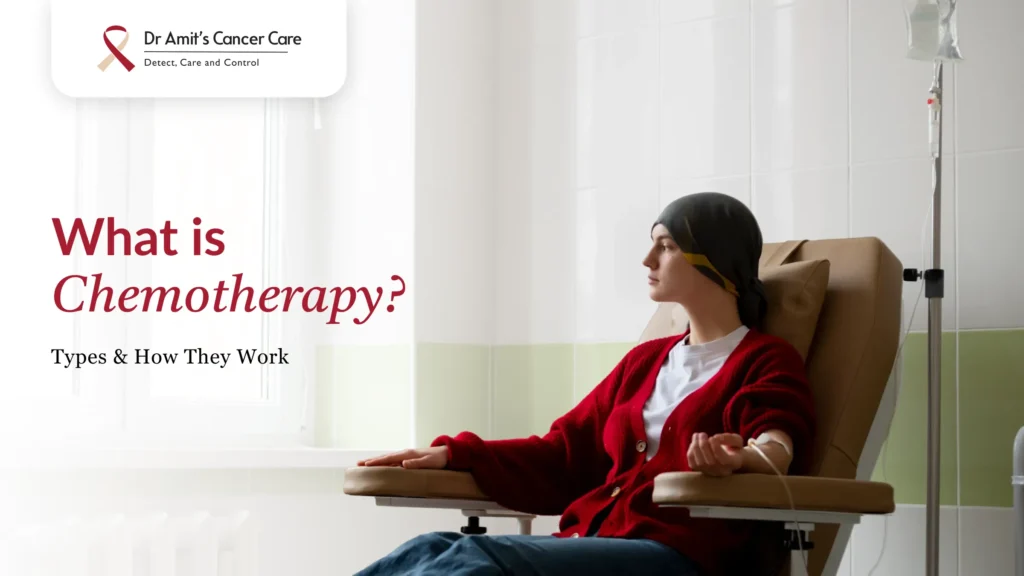

Chemotherapy is a type of cancer treatment that uses medicines to kill the unwanted cancer cells and helps stop the growth of the tumour. It is generally given alongside the other cancer treatments, including radiotherapy and surgery, and has some side effects as well. It has many types and is usually given through an intravenous route and is successful as a treating therapy in almost all cancers.
What Is Chemotherapy?
Chemotherapy (often shortened to “chemo”) is a type of cancer treatment that uses powerful medicines to destroy or slow down the growth of cancer cells. It is also called cancer chemotherapy.
Cancer is a condition in which there is abnormal growth of cells, which causes a tumour. The divide quickly grows, disturbing the normal function of the body.
Chemotherapy drugs target any cell that is dividing too fast and stop its growth, being one of the treatments for cancer.
Chemotherapy can be used for different goals, depending on your stage and type of cancer:
| Purpose of Chemotherapy | What It Means |
| To Cure Cancer | Destroys cancer cells completely with the aim of eliminating the disease. |
| To Control Cancer | Slows or stops the growth and spread of cancer when complete cure is not possible. |
| To Relieve Symptoms (Palliative Chemotherapy) | Helps reduce symptoms, improve comfort and maintain quality of life in advanced cancer. |
| Before Surgery (Neoadjuvant Chemotherapy) | Shrinks the tumour before surgery, making it easier and safer to remove completely. |
| After Surgery (Adjuvant Chemotherapy) | Destroys any remaining cancer cells after surgery to reduce the risk of recurrence. |
If you’d like a deeper, personalised understanding of which goal applies to your case, you can book a consultation with Dr. Amit Chakroborty to discuss your specific diagnosis and treatment plan.
Chemotherapy can serve different purposes depending on your cancer type, stage, overall health, and treatment plan. Dr. Amit Chakraborty and his team can help you understand whether chemotherapy may be appropriate for your condition and how it fits into your overall cancer care.
How Does Chemotherapy Work?
What happens in chemotherapy is that the drugs are designed to attack rapidly dividing cells so that they interrupt the process that cancer cells use to grow and divide.
How chemotherapy works:
- Damaging the cancer cell’s DNA so it can no longer copy itself correctly
- Blocking the building blocks (like DNA and RNA) that cancer cells need to grow
- Interfering with cell division at the exact moment the cell tries to split into two
- Triggering the cell’s own “self-destruct” switch (a natural process called apoptosis) once the damage is too severe to repair
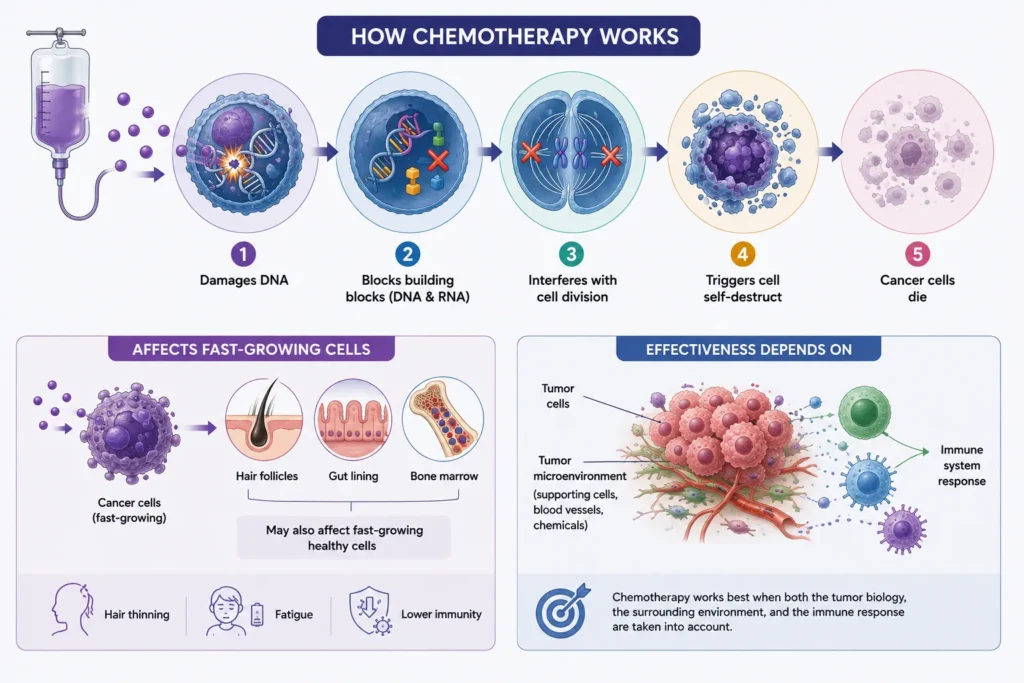
Because chemotherapy can’t always tell the difference between a fast-growing cancer cell and a fast-growing healthy cell (like those in your hair follicles, gut lining, or bone marrow), it can affect these normal cells too.
This is exactly why chemotherapy causes side effects like hair thinning, fatigue, or a dip in immunity, and managing chemotherapy side effects is important.
Chemotherapy’s effectiveness depends not just on how fast tumour cells divide but also on how the tumour’s surrounding environment and the body’s own immune system respond to treatment (Tilsed et al., 2022).
How Many Types of Chemotherapy?
Different types of chemotherapy are based on the chemotherapy drugs, which are classified on the basis of what they are made of and their ability to destroy the cells.
While some chemotherapy medications kill cancer cells at every stage of the cell cycle, others are most effective during particular stages.
Here are the main chemotherapy types:
1. Alkylating Agents
These drugs directly damage a cancer cell’s DNA, stopping it from dividing. They’re commonly used for cancers like lung, breast, and ovarian cancer, as well as leukaemias and lymphomas.
2. Antimetabolites
These drugs “trick” cancer cells by disguising themselves as the normal building blocks (like DNA or RNA components) the cell needs to grow. Once the cell absorbs them, it can’t function properly and dies. Commonly used for breast, ovarian, and intestinal cancers.
3. Anti-Tumour Antibiotics
These work by interfering with the enzymes cancer cells need to copy their DNA.
4. Topoisomerase Inhibitors
These block enzymes called topoisomerases, which cancer cells rely on to “unwind” their DNA before dividing. Without them, the cell gets stuck and can’t multiply.
5. Mitotic Inhibitors (Plant Alkaloids)
Derived from natural plant compounds, these stop cancer cells right at the moment they try to split into two new cells.
Because different chemotherapy drug types target cancer cells differently, using different types of chemotherapy treatment can increase effectiveness.
Use of different chemotherapy treatment types together is called combination chemotherapy.
Additionally, combining medications can lessen the chance that your body will develop a resistance to a particular medication. (Mustapha et al., 2021; Tilsed et al., 2022).
This is one of the key treatment strategies Dr. Amit Chakraborty personalises based on your cancer diagnosis and staging.
How Is Chemotherapy Done?
Chemotherapy drugs are designed to attack rapidly dividing cells so as to interrupt the process that cancer cells use to grow and divide.
These drugs can be introduced into the body through many routes, of which intravenous is the most widely used.
Following are different ways in which chemotherapy is given.
| Method of Chemotherapy | How It Is Given |
| Intravenous (IV) Infusion | The most common method, where chemotherapy is delivered directly into a vein through a drip. |
| Oral Chemotherapy | Given as tablets or capsules that are taken at home exactly as prescribed by the doctor. |
| Injection | Chemotherapy is injected either under the skin (subcutaneous) or into a muscle. |
| Intrathecal Chemotherapy | The medicine is injected into the fluid surrounding the brain and spinal cord to treat certain cancers affecting the nervous system. |
| Topical Chemotherapy | A chemotherapy cream is applied directly to the skin to treat certain types of skin cancer. |
| Intraperitoneal or Regional Chemotherapy | The medicine is delivered directly into a body cavity or near the tumour, commonly for cancers such as ovarian cancer. |
The route your doctor chooses depends on where your cancer is, how it needs to be absorbed, and what will be gentlest on your body while still being effective (Kciuk et al., 2023 concept referenced generally; Amjad, Chidharla and Kasi, 2023).
What Happens in Chemotherapy?
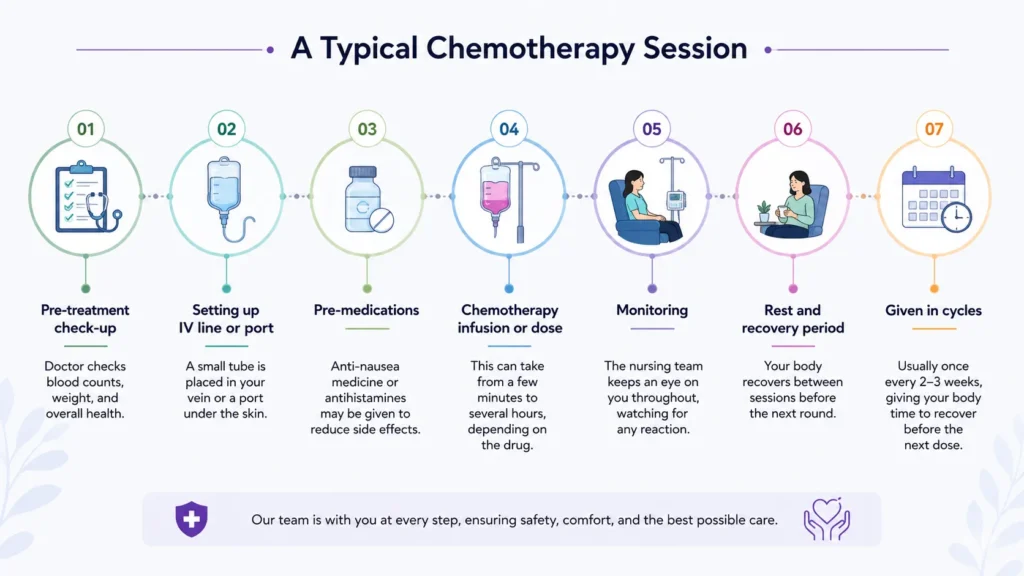
If you’re wondering “what happens in chemotherapy” on the actual day of treatment, here’s what a typical session usually looks like:
Pre-treatment check-up
Your doctor checks your blood counts, weight, and overall health to confirm you’re fit for the session.
- Setting up the IV line or port
If you’re getting IV chemo, a small tube is placed in your vein or a permanent port under the skin.
- Pre-medications
You may be given anti-nausea medicine or antihistamines beforehand to reduce side effects
- The chemotherapy infusion or dose
This can take anywhere from a few minutes to several hours, depending on the drug
- Monitoring
The nursing team keeps an eye on you throughout, watching for any reaction
- Rest and recovery period
Chemotherapy is usually given in cycles (for example, once every 2–3 weeks), giving your body time to recover between doses before the next round.
This cyclical pattern isn’t random. It’s deliberately designed to give your healthy cells a chance to bounce back between doses while still keeping consistent pressure on the cancer cells (Mustapha et al., 2021).
If you’re preparing for your first session, Dr. Amit Chakroborty’s best cancer doctor in Mumbai guide on what to expect on your first chemotherapy day walks you through practical tips on what to eat, what to bring, and how to plan your day.
Knowing what to expect can make the chemotherapy journey feel more manageable. Dr. Amit Chakraborty and his team can help you understand your treatment schedule, prepare for each session, and address questions about your individual chemotherapy plan.
Common Side Effects
Because chemotherapy affects all fast-dividing cells, not just cancerous ones, some temporary side effects of chemotherapy are common:
- Fatigue and low energy
- Hair thinning or hair loss
- Nausea or appetite changes
- Lower immunity (increased infection risk)
- Mouth sores
Most of these side effects are temporary and manageable with the right supportive care, which is something Dr. Amit Chakroborty’s team plans for right from your very first consultation. Learn more about the side effects of chemotherapy from Dr. Amit Chakraborty.
Chemotherapy और Radiation के Side Effects | Dr. Amit Chakraborty | Dr. Amit’s Cancer Care
Explore nutrition tips during chemotherapy and how to boost immunity during cancer treatment for more guidance.
The Next Step
Chemotherapy is one of the treatments used for cancer in order to stop the abnormal growth of the cells causing the disease. It can be given through many routes, of which intravenous is common, and different types of chemotherapies can also be given together, which is called combination chemotherapy.
Since it fails to differentiate between a cancer cell and a human cell and destroys all cells that grow rapidly, it has some side effects, which can be easily pacified as well.
If you still have questions about your specific diagnosis, consult Dr. Amit Chakroborty for a personalised, judgement-free discussion about your treatment options.
References
- Amjad, M.T., Chidharla, A. and Kasi, A., 2023. Cancer Chemotherapy.
- Mustapha, A., Ismail, A., Abdullahi, S.U., Hassan, O.N., Ugwunnaji, P.I. and Berinyuy, E.B., 2021. Cancer chemotherapy: a review update of the mechanisms of action, prospects and associated problems. BIOMED Natural and Applied Science, 1(1), pp.1–19.
- Tilsed, C.M., Fisher, S.A., Nowak, A.K., Lake, R.A. and Lesterhuis, W.J., 2022. Cancer chemotherapy: insights into cellular and tumor microenvironmental mechanisms of action. Frontiers in Oncology, 12, p.960317.



 Oct 25, 2024