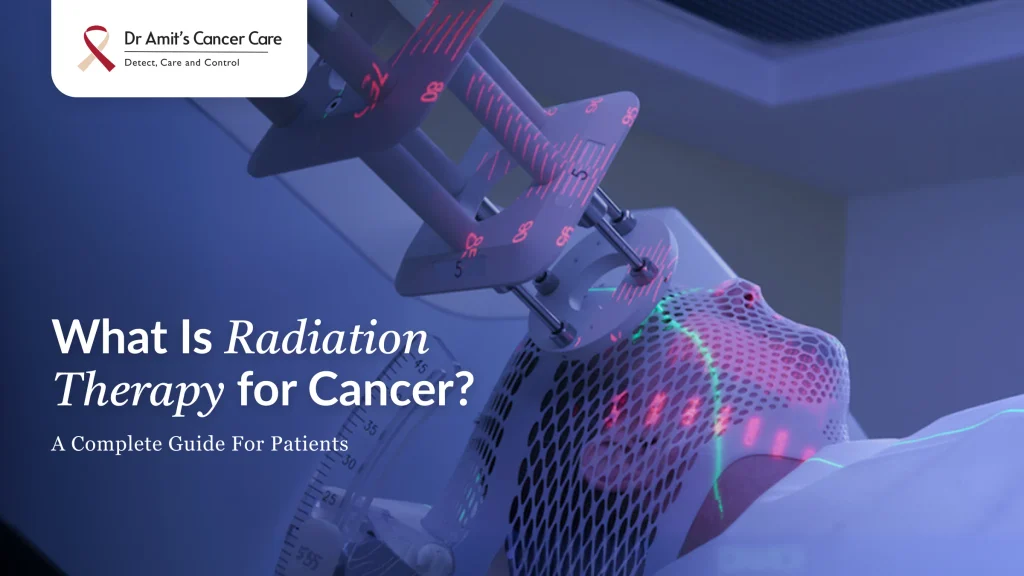

Quick Answer: Radiation therapy uses high-energy beams to damage the DNA of cancer cells, stopping them from growing and eventually killing them. It’s one of the three main pillars of cancer treatment alongside surgery and chemotherapy, and around half of all cancer patients receive it at some point.
Types: external beam radiation (most common) or internal radiation (brachytherapy)
When it’s used: to cure localised cancer, shrink a tumour before surgery, clean up cells after surgery, alongside chemotherapy for advanced disease, or to relieve symptoms
What it feels like: painless, similar to an X-ray, with side effects depending on the treated area
Duration: anywhere from a single session to several weeks of daily sessions
Radiation therapy for cancer is a treatment that uses high-energy beams, most often X-rays, to damage and destroy cancer cells while limiting harm to the healthy tissue around them. Radiotherapy is also one of the three main pillars of cancer treatment, alongside surgery and chemotherapy, and roughly half of all cancer patients receive it at some point during their care.
If you or your loved one have just been told that radiation therapy is part of your treatment plan, it’s completely reasonable to want to understand what it actually involves before your first session. This guide covers how radiation therapy works, the different types, when it’s typically recommended, what a course of treatment looks like, the side effects to expect, and how it differs from chemotherapy.
What Is Radiation Therapy for Cancer?
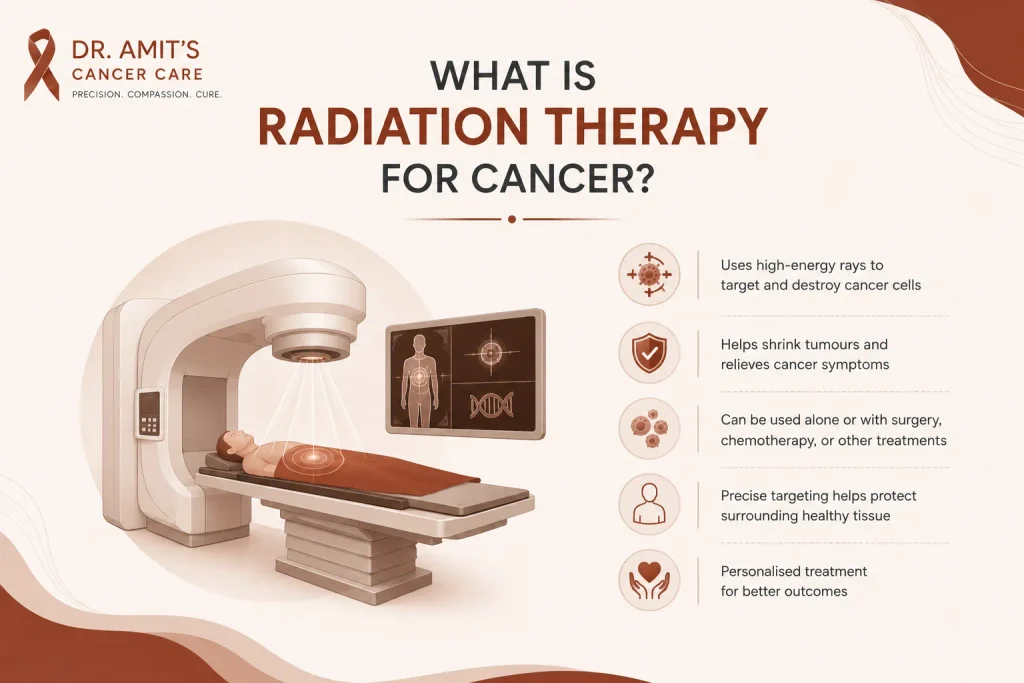
Radiation therapy for cancer is a treatment that exposes controlled doses of high-energy radiation at a tumour to damage the DNA inside cancer cells, stopping them from growing and dividing until they eventually die. It can be used to try to cure cancer, to shrink a tumour before or after surgery, or to relieve symptoms in advanced disease.
Radiation therapy has been part of cancer treatment for over a century, and it remains one of the most widely used and well-studied cancer treatments available today (Baskar et al., 2012).
Unlike surgery, which physically removes a tumour, radiation therapy works by injuring the cancer cells in place, and because cancer cells are generally less able to repair this kind of damage than healthy cells, the tumour is affected more than the surrounding tissue over a course of treatment.
How Does Radiation Therapy Work?
Radiation therapy works by damaging the DNA inside cancer cells, which either kills them outright or stops them from being able to divide and multiply. Healthy cells nearby are also affected, but they’re generally better able to detect and repair this damage than cancer cells are, which is the basic principle the entire treatment relies on.
What Happens During Radiation Therapy?
| High-energy radiation is directed at the cancer. ↓ Radiation damages the DNA inside cancer cells. ↓ Cancer cells lose their ability to grow and divide normally. ↓ Damaged cancer cells gradually die. ↓ The tumour becomes smaller, or the cancer is controlled. ↓ Radiation therapy helps destroy cancer cells while aiming to protect nearby healthy tissue |
This is also why radiation is usually delivered in smaller doses over multiple sessions, called fractions, rather than all at once. Splitting the total dose gives healthy tissue time to recover between sessions while still building up a cancer-damaging effect in the tumour.
If you have questions about how radiation therapy works, how it affects cancer cells, or why it may be recommended as part of your treatment, discussing your individual case with a cancer specialist can give you clearer answers.
Research has shown that, for some cancers, giving a slightly higher dose per session over fewer total sessions works just as well as the traditional longer schedule. (START Trialists’ Group, 2008).
Your radiation oncologist chooses the total dose, the number of sessions, and the schedule based on your specific cancer type, its location, and your overall health.
What are the Types of Radiation Therapy?
The two broad categories of radiation therapy are external beam radiation, where a machine delivers radiation from outside the body, and internal radiation (brachytherapy), where a radioactive source is placed inside or very close to the tumour itself. Most patients receive external beam radiation, though the right type depends on the cancer being treated.
| Radiation Technique | How It Works and Key Benefits |
| External Beam Radiation | Radiation is delivered from a machine outside the body. Within external beam radiation, more precise modern techniques such as intensity-modulated radiation therapy (IMRT) and image-guided radiation therapy (IGRT) allow the radiation beam to be shaped closely around the tumour, sparing more of the healthy tissue and organs nearby. |
| Intensity-Modulated Radiation Therapy (IMRT) | IMRT can help spare nearby healthy tissues and organs while delivering radiation to the tumour. A large randomised trial in head and neck cancer found that using IMRT to spare the parotid (salivary) glands significantly reduced the chance of severe long-term dry mouth compared with older, conventional radiotherapy techniques. (Nutting et al., 2011). |
| Image-Guided Radiation Therapy (IGRT) | IGRT uses imaging to help guide radiation delivery, allowing the treatment to be targeted more precisely around the tumour and helping spare nearby healthy tissue. |
| Stereotactic Radiation Therapy | Stereotactic techniques deliver very precisely targeted, high-dose radiation in just a few sessions. They are increasingly used for small, well-defined tumours. |
| Brachytherapy (Internal radiation) | Brachytherapy remains a standard option for certain cancers, such as some gynaecological and prostate cancers, where the radiation source can be placed directly at the tumour site. |
When Is Radiation Therapy Used?
Radiation therapy can be used at nearly any stage of cancer, depending on the goal, such as curing localised cancer on its own, shrinking a tumour before surgery, destroying any remaining cancer cells after surgery, alongside chemotherapy for locally advanced disease, or relieving pain and other symptoms in advanced cancer. There isn’t one single reason radiation is used, and the reasons depend entirely on the specific case.
For some cancers, radiation given at the same time as chemotherapy, called concurrent chemoradiation, is a standard approach for locally advanced disease that can’t be fully addressed by surgery alone.
Radiation is also increasingly combined with newer targeted drugs. Advanced head and neck cancer research found that adding a targeted antibody drug to radiotherapy improved both cancer control and overall survival (Bonner et al., 2006). This combination approach is particularly relevant to cancers such as oral cancer, tongue cancer, laryngeal cancer, and hypopharyngeal cancer, where surgery, radiation, and drug treatment are often planned together rather than in isolation.
What to Expect During Radiation Therapy
Radiation therapy treatment usually begins with a planning session called a simulation, followed by regular treatment sessions that use high-energy radiation to target and destroy cancer cells. Depending on the type and stage of cancer, radiation treatment may involve a single session or daily sessions over several weeks.
Before Treatment: The Simulation
| Step | What Happens |
| Mapping appointment | You get a CT scan to map the exact location of the tumour. |
| Positioning tools | Your team may make custom moulds, rests, or plastic masks to keep you still. |
| Tiny marks | The team may place tiny permanent freckle-sized tattoos on your skin to align the machine accurately. |
Small, permanent skin marks or a custom-fitted mask or mould may be used to make sure you’re positioned identically at every session.
During Daily Treatment Sessions
| Step | What Happens |
| Getting set up | Therapists help you lie down in the exact position used during simulation. |
| The machine | A large machine called a linear accelerator moves around you, but it does not touch you. |
| What it feels like | You will not feel, see, or smell the radiation. You might hear buzzing or clicking noises. |
| Communication | Staff step into a control room, but they can see, hear, and talk to you the whole time. |
| Radioactivity | External beam radiation does not make your body radioactive; you can safely go home and be around others right after. |
The actual treatment sessions are usually quick, often 15 to 30 minutes, including setup. This timing may vary for head and neck cancer and other locations, depending on the location of the cancer.
Radiation itself is completely painless, similar to having an X-ray taken, though you won’t feel or see anything happening during the beam delivery. A typical course runs anywhere from a single session to several weeks of daily weekday sessions, depending on the cancer type, its stage, and the goal of treatment.
“Most of the anxiety I see before radiation therapy is about the unknown machine, the mask, whether it will hurt. Once patients go through the simulation and understand exactly what each session involves, that fear usually settles. It’s a very controlled, precise process, and our team is watching and communicating with you throughout, even though you’re alone in the room during the beam.”
— Dr. Amit Chakraborty
MBBS, MS – General Surgery,
MCh – Surgical Oncology MRCS (Royal College of London) UK
Your radiation oncology team will explain your specific schedule in advance so you know what to plan around.
What are the Side Effects of Radiation Therapy?
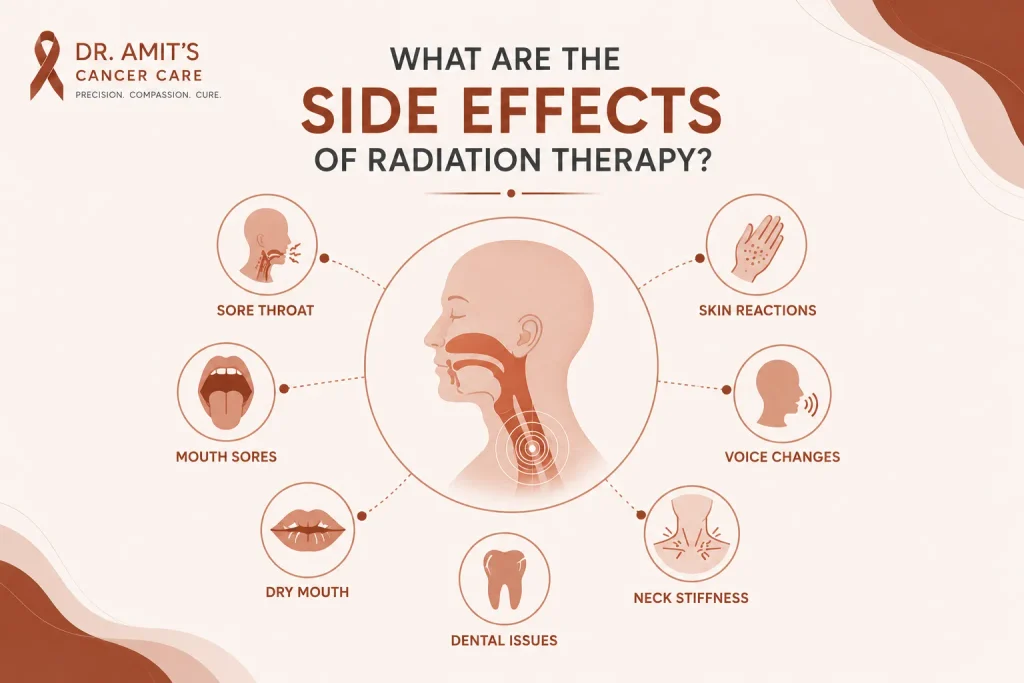
Side effects from radiation therapy depend heavily on which part of the body is being treated, since radiation mainly affects the tissue in and around the treatment area rather than the whole body. Fatigue is common regardless of the area treated, but most other side effects are specific to the site.
Side effects of radiation to the head and neck cancer are as follows:
- Sore throat
- Changes in taste
- Dry mouth
- Redness in the mouth
Most side effects build up gradually over the course of treatment and improve within weeks of finishing. However, a smaller number of side effects may last longer, which is exactly why techniques that spare healthy tissue, such as IMRT, have become such an important focus of modern radiation therapy.
Your treatment team will typically check in with you throughout the course to manage side effects as they appear, rather than waiting until treatment ends.
Radiation Therapy vs Chemotherapy
Radiation therapy treats cancer locally, targeting a specific area of the body, while chemotherapy works systemically, travelling through the bloodstream to reach cancer cells anywhere in the body. This is the core difference, and it’s why the two are often used together rather than as alternatives to each other.
| Chemotherapy | Radiation Therapy |
| Because chemotherapy circulates throughout the body, it can also affect fast-growing healthy cells elsewhere. | Radiation therapy mainly affects the treated area, so its side effects are more localised to that part of the body. |
| Side effects like hair loss and nausea are more commonly associated with chemotherapy than with radiation. | The side effects of radiation therapy generally depend on the area of the body being treated. |
Depending on the cancer, the two may be given one after another or at the same time as part of a combined chemoradiation plan.
Questions to Ask Your Radiation Oncologist
Before starting radiation therapy, a few direct questions can help you understand exactly what your treatment is meant to achieve and what to expect along the way.
Following are the questions you may ask your oncologist before starting radiation therapy:
- What is the goal of my radiation therapy, to cure, to shrink a tumour, or to manage symptoms?
- How many sessions will I need, and how long does each one take?
- What is the success rate of radiation therapy?
- What are the possible side effects, and how are they managed?
- Will I also need surgery or chemotherapy, and in what order?
- What are the nutrition-related tips to be considered during the treatment?
A radiation oncologist confident in the plan should be able to answer all of this clearly, tied to your specific cancer, not as a general explanation of radiation therapy.
At Dr. Amit Chakraborty’s consultation, you can discuss these questions in the context of your specific cancer, treatment goals, and overall condition. With his experience in cancer surgery and head and neck cancer care, he can help you understand where radiation therapy fits into your treatment plan, what to expect from it, and whether surgery or chemotherapy may also be needed. A consultation can give you clearer answers before you begin treatment and help you make an informed decision about the next step.
Book a Consultation with Dr Amit Chakraborty
The only reliable way to know whether, when, and how radiation therapy fits into your treatment is a proper evaluation of your cancer’s type, stage, and location, since the right plan differs from one patient to the next.
Dr Amit Chakraborty is a cancer surgeon who coordinates surgery, radiation, and medical oncology for each patient’s head and neck cancer care. Book a consultation with Dr. Amit Chakraborty to understand exactly how radiation therapy fits into your cancer treatment plan.
If you have been advised radiation therapy or are unsure whether it is the right treatment for your cancer, a specialist consultation can help you understand your treatment options based on your cancer type, stage, and location.
References
Baskar, R., Lee, K.A., Yeo, R. and Yeoh, K.W. (2012) ‘Cancer and radiation therapy: current advances and future directions‘, International Journal of Medical Sciences, 9(3), pp. 193–199.
START Trialists’ Group (2008) ‘The UK Standardisation of Breast Radiotherapy (START) Trial A of radiotherapy hypofractionation for treatment of early breast cancer: a randomised trial‘, Lancet Oncology, 9(4), pp. 331–341.
Nutting, C.M., Morden, J.P., Harrington, K.J., Urbano, T.G., Bhide, S.A., Clark, C., Miles, E.A., Miah, A.B., Newbold, K., Tanay, M., Adab, F., Jefferies, S.J., Scrase, C., Yap, B.K., A’Hern, R.P., Sydenham, M.A., Emson, M. and Hall, E. (2011) ‘Parotid-sparing intensity modulated versus conventional radiotherapy in head and neck cancer (PARSPORT): a phase 3 multicentre randomised controlled trial‘, Lancet Oncology, 12(2), pp. 127–136.
Bonner, J.A., Harari, P.M., Giralt, J., Azarnia, N., Shin, D.M., Cohen, R.B., Jones, C.U., Sur, R., Raben, D., Jassem, J., Ove, R., Kies, M.S., Baselga, J., Youssoufian, H., Amellal, N., Rowinsky, E.K. and Ang, K.K. (2006) ‘Radiotherapy plus cetuximab for squamous-cell carcinoma of the head and neck‘, New England Journal of Medicine, 354(6), pp. 567–578.



 Dec 17, 2024