
Key Takeaways
- “Last stage” usually refers to stage 4 oral cancer. At this stage, the cancer may have grown into nearby tissues, affected lymph nodes in the neck or spread to other parts of the body.
- Persistent changes in the mouth should not be ignored. Ongoing pain, a mouth ulcer that does not heal, repeated bleeding, bad odour, a neck lump or increasing difficulty opening the mouth are symptoms that need medical attention.
- Eating and speaking can become difficult as the cancer progresses. You may have trouble chewing, swallowing food or liquids, moving your tongue or speaking clearly. These problems can eventually contribute to weight loss, weakness and fatigue.
- The symptoms can look different depending on where the cancer started. A tumour on the tongue may affect tongue movement and speech, while cancers of the cheek, gums, jaw or floor of the mouth can cause problems with mouth opening, chewing or jaw movement.
- New symptoms outside the mouth can occur when cancer spreads. Persistent cough or breathlessness may occur with lung involvement, deep bone pain with bone involvement, and jaundice or abdominal swelling when the liver is affected.
- Symptoms alone cannot tell you the stage of cancer. An examination, imaging and biopsy are needed to confirm the diagnosis and determine how far the cancer has progressed.
- Some symptoms need urgent attention. Heavy bleeding, difficulty breathing, being unable to swallow liquids or saliva, or sudden severe confusion or drowsiness requires prompt medical help.
Oral cancer in its last stage can cause several noticeable changes in the mouth, throat and other parts of the body. Common symptoms include persistent pain in the mouth, jaw or ear, an ulcer that does not heal or keeps bleeding, a hard lump in the neck, difficulty opening the mouth, and problems with swallowing or speaking. Some people may also experience unexplained weight loss, tiredness, cough, breathlessness, bone pain or jaundice if the cancer has spread to other parts of the body.
When people refer to “last stage” oral cancer, they usually mean stage 4 oral cancer, the most advanced stage in the TNM staging system. Stage 4 is further divided into 4A, 4B and 4C based on the size and local spread of the tumour, involvement of nearby lymph nodes and whether the oral cancer has spread to distant organs (Amin et al., 2017).
The symptoms can vary from person to person because they depend on where the cancer started and how far it has progressed. Some symptoms may appear gradually, while others become more noticeable as the disease advances. Knowing these changes can help you recognise when medical evaluation is needed and describe your symptoms clearly to an oral cancer specialist.
Noticing persistent mouth, jaw or swallowing symptoms?
How Symptoms Change in Stage 4 Oral Cancer
Oral cancer can look very different as it progresses. In the early stages, you may notice only a small ulcer, patch or change in the mouth, and it may not cause much pain. By stage 4, the tumour may have grown deeper into nearby tissues, including muscle, bone, nerves or blood vessels. You may then experience more persistent pain, difficulty eating or swallowing, reduced mouth opening, or swelling in the mouth, jaw or neck.
The oral cancer symptoms you experience depend on where the cancer is located and how far it has spread. In stage 4A and 4B, you may mainly notice symptoms affecting the mouth, jaw and neck. In stage 4C, if the cancer has spread to distant parts of the body, you may also develop symptoms related to the affected organ, such as a persistent cough, breathlessness or bone pain (Amin et al., 2017).
| Note Symptoms alone cannot tell you whether oral cancer is stage 3, stage 4A, 4B or 4C. The stage is set by a specialist after examination, imaging and biopsy. |
The symptoms below explain the common changes you may notice in stage 4 oral cancer and what they can mean.
Persistent Pain in the Mouth, Jaw and Ear
Pain is one of the most common oral cancer last-stage symptoms. It may feel sharp, burning, aching or throbbing, and it usually worsens while chewing, swallowing or speaking. As the tumour presses on or grows into nerves, the pain can become constant, including at night.
You may feel that the pain is not limited to the mouth. It can spread to your jaw, the side of your face or even your ear on the same side as the tumour. This happens because the mouth, throat and ear share some of the same nerve pathways, so you may feel pain in the ear even when there is no problem with the ear itself (Mehanna et al., 2010). You may also notice numbness or a tingling sensation in your lip, chin, tongue or cheek if the cancer affects a nearby nerve.
As the disease progresses, these changes can occur along with visible changes inside the mouth, making the oral cancer deadly. One of the most noticeable is an ulcer that does not heal, may bleed easily and can sometimes cause a persistent unpleasant odour.
| Expert Insight “Pain, difficulty eating and breathing changes are the symptoms families notice first in advanced oral cancer. Reporting them early helps the care team keep the patient comfortable.” Dr. Amit Chakraborty MBBS, MS, MCh (Surgical Oncology), MRCS (UK) Head & Neck Cancer Specialist |
A Non-Healing Ulcer, Bleeding and Bad Odour
A non-healing mouth ulcer is one of the most common warning signs of oral cancer. If an ulcer lasts for more than two weeks, keeps returning, or begins to bleed, it should be examined by a specialist. In advanced oral cancer, the ulcer may become larger, deeper and more painful.
You may notice the ulcer on your tongue, inside your cheek, along the gums or on the floor of your mouth. It may have hard, raised or uneven edges and may bleed when you eat, brush your teeth or touch the area. As the tumour breaks down, the affected tissue can also become infected, leading to a persistent unpleasant or foul smell from the mouth. This can be particularly difficult to manage and may affect your eating, speaking and daily comfort.
| Important Sudden or heavy bleeding from the mouth or neck requires immediate medical attention. |
If you notice an ulcer that is getting larger, bleeding repeatedly or not healing, do not wait for it to settle on its own. In some cases, advanced oral cancer can also affect the muscles and tissues involved in opening the mouth, leading to another noticeable changes like difficulty opening your mouth fully.
Difficulty Opening the Mouth (Trismus)
Difficulty opening the mouth, known as trismus, can occur when advanced oral cancer affects the muscles, tissues or jaw involved in opening the mouth. You may gradually find it harder to open your mouth fully, making eating, speaking and brushing your teeth difficult.
At first, you might struggle to take a large bite of food or open your mouth fully during a dental examination. As the restriction increases, even fitting a spoon into your mouth, chewing or cleaning your teeth may become difficult. You may also notice more discomfort and bad breath because some areas of the mouth become harder to clean.
If your mouth is becoming progressively harder to open, especially along with a persistent ulcer, bleeding, pain or swelling, you should have it checked by a specialist. As the cancer affects the mouth and throat, you may also develop difficulty swallowing food or liquids or speaking clearly, which can make eating and communication increasingly difficult.
Difficulty Swallowing and Speaking
Difficulty swallowing and changes in speech can occur when advanced oral cancer affects the tongue, floor of the mouth or tissues at the back of the mouth. You may notice slurred or unclear speech or find that swallowing food and liquids becomes painful or difficult.
At first, food may feel as though it is getting stuck, or chewing and swallowing may take more effort. As the condition progresses, even soft foods or liquids can become difficult to swallow. You may also cough or choke while eating or drinking if food or saliva enters the airway.
These changes can make eating and communicating difficult and may increase the risk of chest infections if food or liquid repeatedly enters the lungs. You may also notice a hard lump or swelling in the neck when nearby lymph nodes are involved. If this symptom occurs along with difficulty swallowing or changes in speech, have it assessed by a specialist.
A Hard Lump or Swelling in the Neck
A firm lump in the neck is often a lymph node that the cancer has reached. In stage 4 oral cancer, these lumps are typically larger, harder and fixed in place rather than moving freely under the skin, and they may be present on one or both sides of the neck. They can be painless or tender, and occasionally the skin over them becomes red or breaks down.
Swelling can also appear under the chin, on the cheek or along the jaw, depending on where the tumour began. A lump or swelling that keeps growing is always a reason for a specialist to examine it.
Weight Loss, Fatigue and Weakness
Rapid, unplanned weight loss is common in the last stage of oral cancer. Painful swallowing, a mouth that will not open, and loss of appetite all reduce how much a person can eat. The cancer itself also changes how the body uses energy, which is why weight and muscle can be lost even when someone is eating. This combination of weight loss, muscle loss and weakness is known as cancer cachexia (Fearon et al., 2011).
Over time this leads to tiredness that rest does not relieve, a hollowed face and general weakness, which can make it difficult to sit up, walk or look after oneself. Families often notice it as the person sleeping more and doing less.
Symptoms When Oral Cancer Spreads to Other Organs
When stage 4C oral cancer spreads to distant organs, you may develop symptoms outside the mouth. The lungs, bones and liver are among the areas that can be affected, and the symptoms depend on where the cancer has spread.
If the cancer reaches your lungs, you may develop a persistent cough, breathlessness, wheezing, chest pain or blood in your sputum. When it spreads to your bones, you may experience deep or worsening pain, sometimes more noticeable at night, and the affected bones may become weaker. If the liver is affected, you may notice yellowing of the skin or eyes, abdominal swelling or pain, nausea or reduced appetite. More rarely, spread to the brain can cause persistent headaches, confusion, weakness or seizures.
| Signs of Spread A persistent cough or breathlessness may occur when the lungs are affected, while deep bone pain may occur with bone spread. Yellowing of the skin or eyes or abdominal swelling can occur when the liver is involved. These symptoms do not confirm that cancer has spread. Imaging and other tests are needed to determine whether distant spread has occurred. |
Last Stage Symptoms by Site: Tongue, Floor of Mouth, Cheek and Gum
The symptoms you notice in advanced oral cancer can depend on the oral cancer type and where the cancer has started. For example, a tumour on the tongue may affect how you speak or swallow, while a tumour in the cheek or jaw may make it harder to open your mouth or chew.
If the cancer starts on the tongue, you may find it increasingly difficult or painful to move your tongue. Your speech may change, swallowing may become harder and pain can sometimes travel towards the ear. When the tumour is towards the back of the tongue, you may also have difficulty swallowing or breathing.
| Keep in mind These symptoms can overlap, so having one of them does not tell you exactly where the cancer has started or what stage it is. Your specialist will determine this through an examination and the necessary tests. |
Cancer in the floor of the mouth can make your tongue feel less mobile. You may notice swelling beneath the tongue or chin, drooling or a lump in the neck. If the cancer starts in the inner cheek, opening your mouth and chewing may become difficult, and you may notice a persistent ulcer that gradually becomes larger.
When the gums or jaw are affected, you may notice a loose tooth, a tooth socket that does not heal, pain or swelling in the jaw, or numbness around your lip or chin. Cancer towards the throat or back of the mouth can cause similar problems, including painful swallowing, changes in your voice, ear pain and a lump in the neck.
Where the Cancer Starts and What You May Notice
| Where it starts | What you may notice |
| Tongue | Your tongue may become painful or difficult to move, and your speech or swallowing may change. |
| Floor of the mouth | Your tongue may feel less mobile, with swelling beneath the tongue or chin. |
| Inner cheek | Opening your mouth and chewing may become difficult, often with a persistent ulcer inside the cheek. |
| Gums or jaw | A tooth may become loose, the jaw may hurt or swell, or your lip or chin may feel numb. |
| Throat or back of the mouth | You may have painful swallowing, a changed voice, ear pain or a lump in the neck. |
What Stage 4 Oral Cancer Looks Like
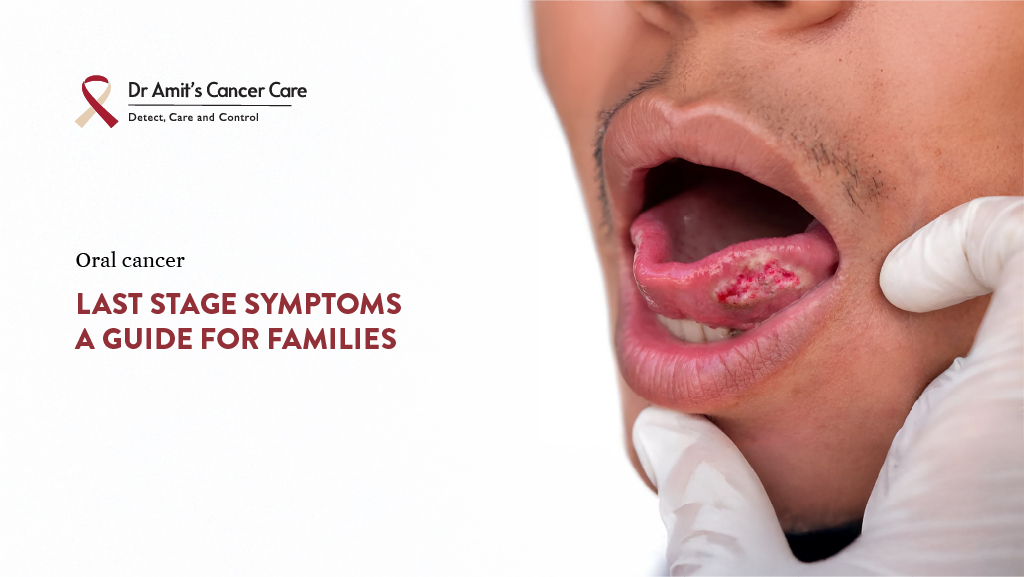
Advanced oral cancer may appear as a large or deep ulcer, a growing lump on the tongue, cheek or gum, or a noticeable change in the texture of the mouth. You may see thickened red or white patches, bleeding, swelling around the jaw or face, loose teeth or a lump in the neck. In some advanced cases, the tumour can grow through the tissues and cause a wound on the cheek or chin.
However, the way a mouth lesion looks cannot tell you whether it is cancer. Several non-cancerous conditions can cause similar ulcers, patches or lumps. A biopsy may be needed to confirm the diagnosis.
Why the First Symptoms Are Often Missed
The changes that eventually become more noticeable may have started as something very small. You may first notice a painless ulcer, a red or white patch or a small lump and assume it is from a bite, infection or simple irritation. Because it does not hurt, it can be easy to ignore and wait for it to settle.
The important thing is whether the change heals or continues to change. An ulcer that lasts for more than about two weeks, a patch that becomes thicker, or an area that starts bleeding or changing shape should be checked by a specialist. Symptoms such as persistent pain, difficulty swallowing or a neck lump may appear later as the disease progresses (Dolan et al., 1998; Alho et al., 2006).
| When Symptoms Need Urgent Attention Sudden or heavy bleeding from the mouth or neck, difficulty breathing or noisy breathing, being unable to swallow even saliva or liquids, pain that is not controlled, a high fever with a worsening wound, and new severe confusion or drowsiness need urgent medical help. Go to the nearest emergency department or contact the care team immediately. |
Emotional and Mental Changes
As the disease progresses, the effects are not always physical. You may feel anxious, low, frustrated or withdrawn, particularly when pain, difficulty eating or poor sleep starts affecting your daily life. Your family may also notice changes in your mood or behaviour. You may sometimes become unusually confused or sleepy. This can have several causes, including medicines, infection, poor nutrition or the effects of advanced cancer. If you or your family notice a significant change in your mood, behaviour or alertness, let your doctor screen for oral cancer so that the cause can be assessed.
When to See a Specialist
You should consider seeing a head and neck cancer specialist if you have a mouth ulcer that has not healed, persistent pain in the jaw or tongue, a lump in the neck, difficulty swallowing or trouble opening your mouth. If you have already been diagnosed with advanced oral cancer, new or worsening symptoms should also be assessed rather than being assumed to be part of the disease.
A specialist can examine your mouth, tongue, jaw and neck, conduct screening tests, review your biopsy reports and scans, and help you understand what your symptoms may mean. This is particularly important when several symptoms appear together or when a change that was previously mild starts getting worse.
Dr. Amit Chakraborty, Head & Neck Cancer Specialist, evaluates patients with oral and other head and neck cancers, including cancers of the tongue and buccal mucosa. His evaluation focuses on understanding the location and extent of the cancer, reviewing the available diagnostic reports and helping patients understand their treatment options based on their individual condition.
If you or someone in your family has a persistent mouth or neck symptom and you are unsure what to do next, you can contact our team to arrange an appointment with Dr. Amit Chakraborty and discuss your concerns with a specialist.
Are persistent mouth or jaw symptoms worrying you?
Frequently Asked Questions
What are the most common oral cancer last stage symptoms?The most common symptoms are persistent pain in the mouth, jaw or ear, a non-healing ulcer that may bleed, a hard lump in the neck, difficulty opening the mouth, trouble swallowing and speaking, weight loss and fatigue. If the cancer has spread, there may also be cough, breathlessness, bone pain or jaundice.
Is dying from oral cancer painful?It can involve pain, particularly in the mouth, jaw and throat, but pain can usually be eased with medicines and palliative care. In the final days, people often become very tired, eat and drink little, and sleep more, and some have changes in breathing. Any pain or distress that is not settling should be reported to the care team early.
What are the last stage symptoms of tongue cancer?Tongue pain, difficulty moving the tongue, slurred speech, trouble swallowing, pain in the ear on the same side, a large ulcer or mass, a neck lump, bleeding and weight loss are common. If the cancer has spread to the lungs, cough and breathlessness may appear.
How do I tell the difference between a mouth ulcer and oral cancer?An ordinary mouth ulcer is usually painful, has a soft edge and heals within one to two weeks. A cancerous ulcer usually does not heal, may be painless at first, often has hard or raised edges and may bleed. Any ulcer that lasts more than two weeks should be examined.
What are the signs that oral cancer has spread to other organs?A cough that does not clear, breathlessness or chest pain can suggest spread to the lungs. Deep bone pain or fractures after minor injury can suggest bone spread. Yellowing of the skin or eyes and swelling of the abdomen can suggest liver spread. A scan is needed to confirm.
Does oral cancer cause weight loss and tiredness?Yes. Painful swallowing, a mouth that does not open and loss of appetite reduce how much a person eats, and the cancer also changes how the body uses energy. This leads to rapid weight loss, weakness and tiredness that rest does not relieve.
What does stage 4 oral cancer look like?It often looks like a large, deep ulcer with hard, raised edges, a growing lump on the tongue, cheek or gum, thickened red and white patches, swelling of the jaw or face, or a lump in the neck. A biopsy is needed to confirm that it is cancer.
Is oral cancer painful?Early oral cancer is often painless, which is one reason it is missed. In advanced oral cancer, pain is common and tends to be constant, worsening with chewing, swallowing or speaking, and it may spread to the jaw or ear.
Can early signs of oral cancer be missed or mistaken for something else?Yes. A small painless ulcer, patch or lump is often mistaken for a bite injury, a fungal infection or a stress ulcer. A sore that does not heal in about two weeks should be checked by a doctor or dentist.
References
Alho, O.-P., Teppo, H., Mäntyselkä, P. and Kantola, S. (2006) ‘Head and neck cancer in primary care: presenting symptoms and the effect of delayed diagnosis of cancer cases’, Canadian Medical Association Journal, 174(6), pp. 779–784.
Amin, M.B. et al. (eds.) (2017) AJCC Cancer Staging Manual. 8th edn. Chicago: Springer.
Dijkstra, P.U., Huisman, P.M. and Roodenburg, J.L.N. (2006) ‘Criteria for trismus in head and neck oncology’, International Journal of Oral and Maxillofacial Surgery, 35(4), pp. 337–342.
Dolan, R.W., Vaughan, C.W. and Fuleihan, N. (1998) ‘Symptoms in early head and neck cancer: an inadequate indicator’, Otolaryngology–Head and Neck Surgery, 119(5), pp. 463–467. doi:10.1016/S0194-5998(98)70102-0.
Fearon, K. et al. (2011) ‘Definition and classification of cancer cachexia: an international consensus’, The Lancet Oncology, 12(5), pp. 489–495.
Hui, D. et al. (2014) ‘Clinical signs of impending death in cancer patients’, The Oncologist, 19(6), pp. 681–687.
Mehanna, H., Paleri, V., West, C.M.L. and Nutting, C. (2010) ‘Head and neck cancer—part 1: epidemiology, presentation, and prevention’, BMJ, 341, c4684. doi:10.1136/bmj.c4684.


 Jun 25, 2024