
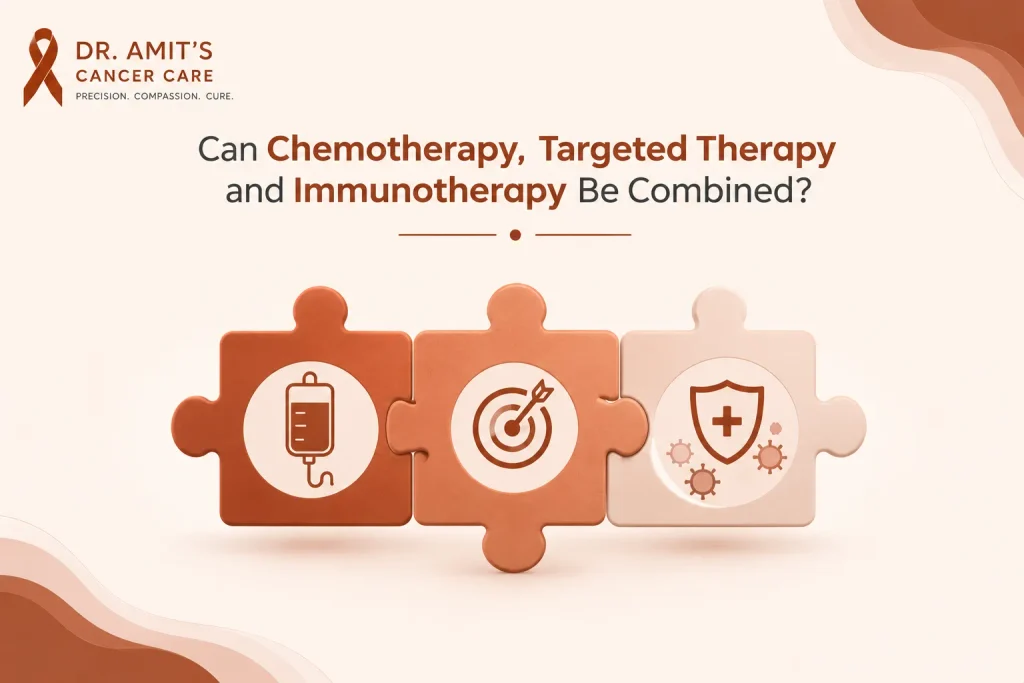
Quick Answer: Chemotherapy, targeted therapy, and immunotherapy are three different ways of treating cancer with drugs:
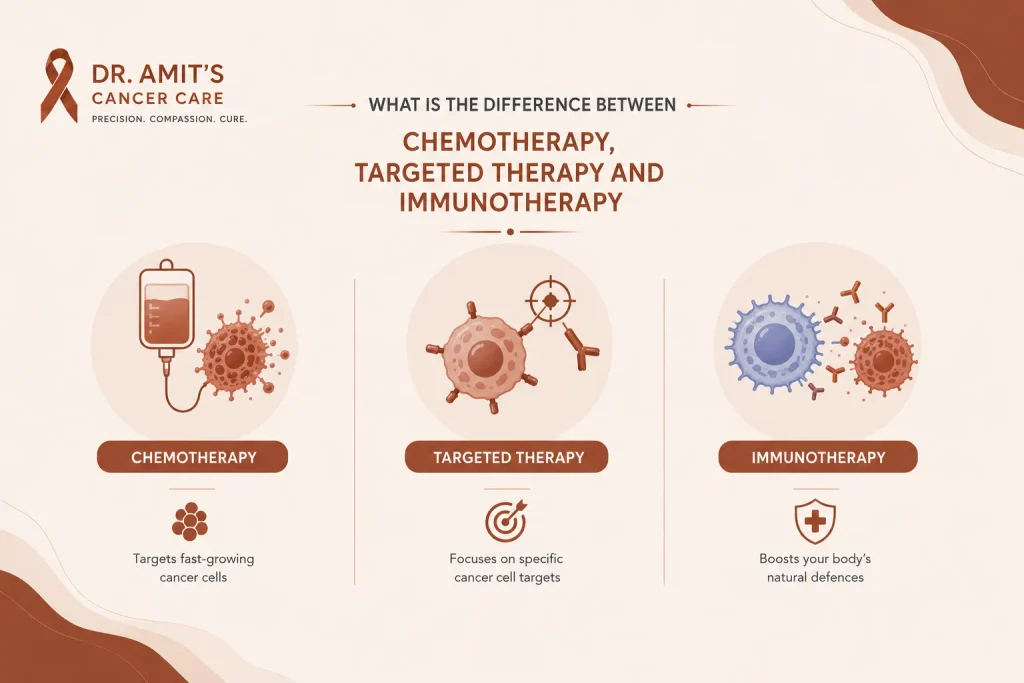
- Chemotherapy: attacks any fast-dividing cell in the body; broadly applicable across most cancer types
- Targeted therapy: blocks a specific molecule or mutation a cancer depends on; only works if the tumour carries that target
- Immunotherapy: helps the immune system recognise and attack cancer cells; effectiveness depends on specific biomarkers
Which one (or combination) fits your cancer depends on its type, stage, and molecular profile.
Chemotherapy, targeted therapy, and immunotherapy are three different ways of treating cancer with drugs, and they work in fundamentally different ways. Chemotherapy attacks any fast-dividing cell, targeted therapy blocks specific molecules that a particular cancer depends on to grow, and immunotherapy helps the body’s own immune system recognise and attack cancer cells. Which one, or which combination, is right for a given cancer depends on the cancer’s type, its specific biology, and how advanced it is.
If you’ve been told to explore treatment options for head and neck cancer and your treatment plan includes one of these, or you’re trying to understand why your doctor chose one over another, it is important to know what each one is actually doing inside the body. This guide covers what each cancer treatment is, the key differences between them, how their side effects compare, and how doctors decide which approach, or combination of approaches, fits your specific cancer.
What Is Chemotherapy?
Chemotherapy uses drugs that target rapidly dividing cells throughout the body, which is an effective way to kill cancer cells but also affects some healthy cells that divide quickly, such as those in hair follicles, the digestive tract, and bone marrow. This is why chemotherapy’s side effects tend to be broader and more systemic than the other two treatments.
Chemotherapy has been a cornerstone of cancer treatment for decades and remains highly effective for many cancer types, whether used on its own, before or after surgery, or alongside radiation. Because it isn’t selective for cancer cells specifically, just for cells that are dividing quickly, it’s sometimes described as a “blunter” tool compared with the more selective approaches that followed it, though that doesn’t make it any less important, and it is still the most effective option for a given cancer.
What Is Targeted Therapy?
Targeted therapy uses drugs designed to block specific molecules or genetic mutations that a particular cancer relies on to grow and survive, rather than attacking all fast-dividing cells the way chemotherapy does. Because of this, targeted therapy only works if a patient’s cancer actually has the specific target the drug is designed for.
This is the major shift targeted therapy represents. Instead of one drug for a cancer type, treatment is matched to the molecular profile of the individual tumour, identified through biomarker or genetic testing (Zugazagoitia et al., 2016).
Research found that patients with a specific EGFR gene mutation who received a targeted drug had significantly better disease control than those who received standard chemotherapy. (Mok et al., 2009).
This is exactly why targeted therapy isn’t a universal upgrade over chemotherapy. It only outperforms chemotherapy in patients whose cancer has the matching target.
What Is Immunotherapy?
Immunotherapy works by helping the body’s own immune system recognise and attack cancer cells, rather than attacking the cancer directly the way chemotherapy and targeted therapy do. The most common type, called checkpoint inhibitors, blocks a mechanism some cancers use to hide from the immune system.
Cancer cells can sometimes exploit natural “off switches” in the immune system to avoid being attacked, and checkpoint inhibitor drugs block these switches so the immune system can recognise and destroy the cancer.
This approach has changed outcomes for several cancer types over the past decade, though, like targeted therapy, its effectiveness varies considerably depending on the specific cancer and certain biomarkers, such as how much of a particular protein the tumour expresses.
What is the Difference Between Chemotherapy, Targeted Therapy and Immunotherapy?
| Chemotherapy | Targeted Therapy | Immunotherapy | |
| How it works | Attacks fast-dividing cells throughout the body | Blocks a specific molecule the cancer depends on | Helps the immune system recognise and attack cancer |
| Who it works for | Broadly applicable across many cancer types | Only cancers with the matching genetic target | Varies by cancer type and certain biomarkers |
| Typical side effects | Hair loss, nausea, fatigue, low blood counts | Often milder, but specific to the drug’s target (e.g., skin or blood pressure changes) | Fatigue, skin reactions, and occasionally inflammation in healthy organs |
| How it’s usually given | Intravenous or oral, in cycles | Usually oral, taken daily | Usually intravenous, every few weeks |
| Can it be combined? | Yes, with surgery, radiation, or either of the others | Yes, sometimes with chemotherapy. | Yes, increasingly combined with chemotherapy |
If you have been advised cancer treatment and are unsure whether chemotherapy, targeted therapy, or immunotherapy is right for you, a specialist can help you understand which approach fits your cancer type and treatment needs.
Immunotherapy vs Chemotherapy: Which Is Better?
Neither is universally “better”. Immunotherapy tends to outperform chemotherapy specifically in cancers that respond well to it, while chemotherapy remains the more reliable choice for cancers. The right answer depends entirely on the cancer type and, in many cases, specific biomarker testing.
In practice, doctors compare a few factors to decide between the two:
Biomarker result
Immunotherapy is favoured when the tumour shows a high level of the relevant immune marker; without it, chemotherapy is usually the stronger option.
Cancer type
Some cancers, like melanoma and certain lung cancers, respond well to immunotherapy; others still rely mainly on chemotherapy.
Speed of response needed
Chemotherapy often shrinks a tumour faster, which can matter in cancers causing significant symptoms.
Tolerance for side effects
Immunotherapy’s side effects are usually milder overall but can occasionally cause serious immune-related reactions that need prompt attention.
Combination potential
In many advanced cancers, the two are given together rather than being chosen as a strict either/or.
This is why “immunotherapy vs chemotherapy, which is better” doesn’t have one answer. It depends on testing your specific tumour, not on the treatment category alone.
Targeted Therapy vs Chemotherapy: Which Is Better?
Targeted therapy tends to outperform chemotherapy specifically in patients whose cancer carries the genetic mutation the drug is designed to block, while chemotherapy remains the better, or only, option for patients whose cancer doesn’t have that mutation. This makes genetic or biomarker testing the centre of the decision.
The choice generally comes down to a few factors:
Mutation status
If tumour testing confirms the specific genetic mutation a targeted drug is built for, targeted therapy usually offers better disease control with fewer of chemotherapy’s broader side effects.
No matching mutation found
Without the relevant mutation, targeted therapy typically doesn’t work as well, and chemotherapy becomes the more effective choice.
How treatment is taken
Targeted therapy is often a daily tablet, which some patients prefer over the cycles of intravenous chemotherapy.
Resistance over time
Cancers can sometimes develop resistance to a targeted drug, so ongoing monitoring and repeat testing may still be needed.
In practice, this means your doctor will typically order molecular testing on your tumour tissue before recommending targeted therapy over chemotherapy, rather than choosing based on cancer type alone.
“Patients sometimes assume targeted therapy or immunotherapy is automatically the better option because it’s newer, but that’s not how it works. If the tumour doesn’t have the matching mutation or marker, chemotherapy is often still the stronger, more reliable choice. The testing is what tells us which drug will actually work for that specific cancer.”
— Dr. Amit Chakraborty
MBBS, MS – General Surgery,
MCh – Surgical Oncology MRCS (Royal College of London) UK
Side Effects
Chemotherapy’s side effects tend to be broader because it affects fast-dividing healthy cells throughout the body, while targeted therapy and immunotherapy side effects are usually more specific, tied to the particular pathway or immune mechanism each drug affects. This doesn’t mean targeted therapy and immunotherapy are automatically easier to tolerate, just that their side effects tend to look different.
Side Effects of Chemotherapy
- Hair loss
- Nausea
- Fatigue
- Drop in blood cell counts, which raises infection risk
Side Effects of Targeted Therapy
- Skin changes
- High blood pressure
- Other effects related to the specific pathway being blocked
Side Effects of Immunotherapy
- Side effects are usually milder overall
- In some cases, the immune system can attack healthy organs
- This can cause inflammation that needs prompt medical attention if it occurs
Your oncology team will explain the specific side effect profile for whichever drug you’re prescribed, since these can vary meaningfully even within the same treatment category.
Can Chemotherapy, Targeted Therapy and Immunotherapy Be Combined?
Yes, these three treatments are increasingly combined rather than used strictly on their own, since combining approaches with different mechanisms can improve outcomes for certain cancers. Combination treatment is now common practice for several advanced cancers, not an unusual exception.
Chemotherapy is frequently combined with immunotherapy for cancers that don’t respond strongly enough to either alone.
Targeted therapy is sometimes advised alongside chemotherapy or radiation depending on the cancer type.
How Does Combination Cancer Treatment Work?
| Cancer is diagnosed. ↓ Cancer type, stage and molecular profile are assessed ↓ The tumour board reviews the patient’s complete cancer profile. ↓ Different cancer treatment options are selected. ↓ Chemotherapy → attacks rapidly dividing cancer cells Immunotherapy → helps the immune system recognise and attack cancer cells. Targeted therapy → acts on specific changes or pathways involved in cancer growth ↓ Treatments may be combined or given in a specific sequence. ↓ The response is monitored, and the treatment plan is adjusted when needed |
The specific combination, sequence, and timing are decided by a multidisciplinary tumour board reviewing the cancer’s type, stage, and molecular profile together, which is why two patients with a similarly named cancer can end up on quite different treatment plans.
Questions to Ask Your Oncologist About Your Treatment Options
Before starting any of these treatments, a few direct questions can help you understand exactly why one approach was chosen over another and what it means for your specific cancer.
Following are the questions you may ask your oncologist about chemotherapy, targeted therapy, and immunotherapy:
- Has my tumour been tested for the biomarkers or mutations that would make targeted therapy or immunotherapy an option?
- Why is chemotherapy (or targeted therapy, or immunotherapy) recommended for my specific cancer?
- Would combining two of these treatments improve my outcome, and what would that involve?
- What side effects should I expect with this specific treatment, and how are they managed?
- If this treatment doesn’t work as expected, what would we try next?
- How will we know if the treatment is working, and how often will that be checked?
- How to overcome challenges post-treatment for each therapy?
An oncologist confident in your plan should be able to answer all of this by pointing to your specific test results and tumour profile, not just a general explanation of how each treatment works.
At Dr. Amit Chakraborty’s consultation, you can go through these questions in the context of your own diagnosis, biomarker testing, and treatment goals. As part of a multidisciplinary tumour board, he can help you understand exactly why a particular treatment, or combination, is being recommended for your cancer.
Book a Consultation with Dr Amit Chakraborty
The only reliable way to know which of these treatments, or which combination, fits your specific cancer is a proper evaluation that includes staging and, in many cases, molecular or biomarker testing of the tumour itself. Reading about the general differences, including this article, is a useful starting point, but it isn’t a substitute for that evaluation.
Dr Amit Chakraborty is a cancer surgeon with an MBBS, MS in General Surgery, MCh in Surgical Oncology, and MRCS from the Royal College of Surgeons, London, and works as part of a multidisciplinary tumour board that coordinates surgery, radiation, and medical oncology for each patient’s head and neck cancer care. Book a consultation with Dr Amit Chakraborty to understand which treatment approach is right for your cancer.
If you are unsure whether chemotherapy, targeted therapy, immunotherapy, or a combination of treatments is right for your cancer, a specialist evaluation can help you understand your options.
References
Zugazagoitia, J., Guedes, C., Ponce, S., Ferrer, I., Molina-Pinelo, S. and Paz-Ares, L. (2016) ‘Current challenges in cancer treatment‘, Clinical Therapeutics, 38(7), pp. 1551–1566.
Mok, T.S., Wu, Y.L., Thongprasert, S., Yang, C.H., Chu, D.T., Saijo, N., Sunpaweravong, P., Han, B., Margono, B., Ichinose, Y., Nishiwaki, Y., Ohe, Y., Yang, J.J., Chewaskulyong, B., Jiang, H., Duffield, E.L., Watkins, C.L., Armour, A.A. and Fukuoka, M. (2009) ‘Gefitinib or carboplatin–paclitaxel in pulmonary adenocarcinoma‘, New England Journal of Medicine, 361(10), pp. 947–957.
Reck, M., Rodríguez-Abreu, D., Robinson, A.G., Hui, R., Csőszi, T., Fülöp, A., Gottfried, M., Peled, N., Tafreshi, A., Cuffe, S., O’Brien, M., Rao, S., Hotta, K., Leiby, M.A., Lubiniecki, G.M., Shentu, Y., Rangwala, R. and Brahmer, J.R. (2016) ‘Pembrolizumab versus chemotherapy for PD-L1-positive non-small-cell lung cancer‘, New England Journal of Medicine, 375(19), pp. 1823–1833.


 May 11, 2026