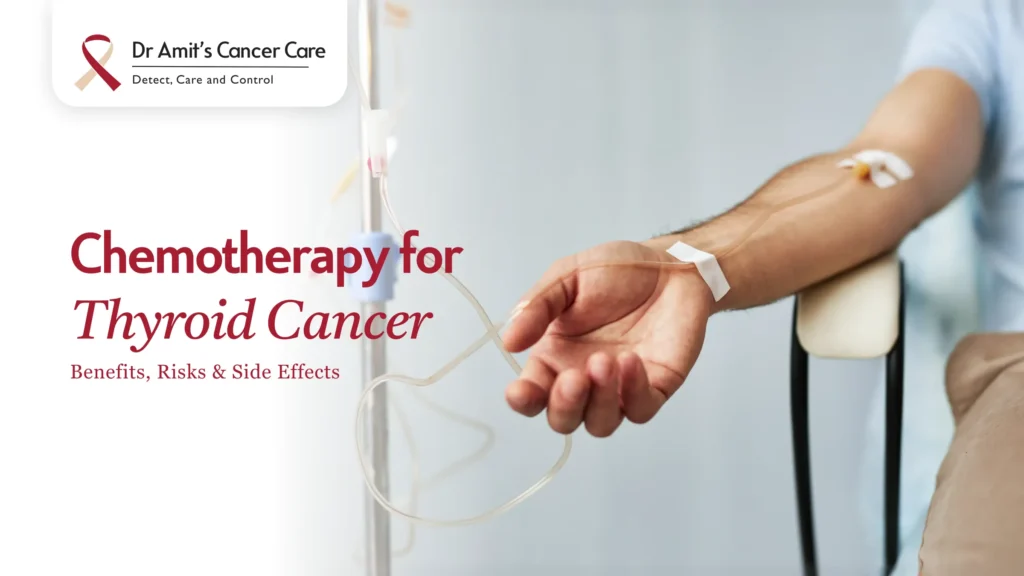

A thyroid cancer diagnosis carries the weight of disappointment, confusion, shock, and many more negative emotions that you are left to process altogether. At this time, your treatment options may feel intimidating. Chemotherapy, especially, can be difficult to understand. In this blog, we will break down what the treatment means and the benefits and risks that come with it.
First, A Quick Recap: What Is Thyroid Cancer?
The thyroid is a small butterfly-shaped gland at the base of your neck. It controls your metabolism and produces hormones your body depends on. Thyroid cancer occurs when cells in this gland begin growing abnormally.
There are four main types:
- Papillary thyroid cancer (PTC) The most common, making up around 80% of cases. Highly treatable.
- Follicular thyroid cancer (FTC): Less common, but it can spread to other parts of the body.
- Medullary thyroid cancer (MTC): Arises from a different set of thyroid cells and can be harder to manage.
- Anaplastic thyroid cancer (ATC): The rarest type, but also the most aggressive.
The type and stage of your cancer determine what treatment plan your doctor will recommend.
When is Chemotherapy an Option for Thyroid Cancer?
Chemotherapy is not the only treatment option for thyroid cancer, there are several methods depending on the specific stage and requirement. Chemotherapy enters the picture in specific situations:
- When the cancer has spread to other organs (metastatic disease)
- When it returns after initial treatment (recurrence)
- When other treatments have stopped working
- For aggressive forms like anaplastic thyroid cancer, where fast action is needed
As Dr. R. Michael Tuttle, a thyroid cancer specialist at Memorial Sloan Kettering Cancer Center, has noted in the oncology community, the goal in advanced thyroid cancer is no longer just remission but long-term disease control and quality of life, which is where chemotherapy, targeted therapy, and newer agents come in together.
How Does Chemotherapy Work?
Chemotherapy works by targeting the cancer cells that rapidly divide. In thyroid cancer, often used as a combination approach. Drugs like cisplatin, doxorubicin, etoposide, and carboplatin have all been studied in advanced thyroid cancer cases.
Patients with advanced thyroid cancer who do not respond well to regular treatments respond much better to certain chemotherapy agents, and also have notably longer survival rates.
What are the Benefits of Chemotherapy for Thyroid Cancer?
When used in the right context, chemotherapy can offer real advantages:
Tumor Shrinkage
Chemotherapy reduces the size of tumors. This makes surgery a better possibility and more effective.
Slowing Disease Progression
Slowing the growth of cancer can significantly extend and improve a patient’s quality of life.
Symptom control
For patients where surgery may not be possible or when the tumor has reached an advanced stage, chemotherapy can reduce pain, certain symptoms, and other complications caused by tumor growth.
Part of a multimodal plan
Chemotherapy is many times combined with targeted therapy or radiation, which can increase its effectiveness, particularly in aggressive types like ATC.
Have questions about your thyroid cancer treatment options? Dr. Amit Chakraborty and his team at Dr. Amit’s Cancer Care are available for consultations at multiple locations across Mumbai. Call +91 86577 17988 to book your appointment.
What are the Risks of Chemotherapy?
Chemotherapy is a powerful treatment, and it does come with risks. Being informed helps you and your care team make the right decisions together.
Suppressed immune system. Chemotherapy reduces white blood cell counts, making your body vulnerable to infections. This is one of the most commonly reported complications.
Organ stress. Some drugs, particularly platinum-based ones like cisplatin, can affect kidney function over time. Regular monitoring is a part of cancer care.
Drug resistance. In some cases, cancer cells can become resistant to chemotherapy, limiting its effectiveness over time.
Not suitable for all patients. Your overall health, age, and existing conditions all factor into whether chemotherapy is appropriate. This is a conversation to have honestly with your oncologist.
What are the Common Side Effects and How to Manage Them?
Side effects are often the most feared part of chemotherapy. Knowing what is coming and having a plan makes a real difference.
Fatigue. This is one of the most commonly reported side effects. Light activity, prioritizing rest, and keeping a consistent sleep schedule can help manage it.
Nausea and vomiting. Antiemetic medications are now very effective at controlling the nausea that comes with it. Staying hydrated and eating small, frequent meals also helps.
Hair loss. Not all chemotherapy drugs cause hair loss, but some do. It is typically temporary, and hair usually grows back after treatment ends.
Mouth sores. Gentle oral hygiene, staying hydrated, and using prescribed mouthwashes can reduce discomfort.
Increased infection risk. Avoid crowded spaces when your counts are low, practice good hand hygiene, and report any fever to your doctor immediately.
Loss of appetite. A dietitian can help you build a plan that keeps your nutrition up even when food feels unappealing.
How Has Chemotherapy Treatment Improved?
This is worth talking about because it represents genuine progress.
Supportive care has come a long way. Anti-nausea medications, growth factors to help rebuild white blood cell counts, and better pain management have all made chemotherapy significantly more tolerable than it was even a decade ago.
Targeted therapies (drugs like lenvatinib and sorafenib) have also changed the treatment landscape for advanced thyroid cancer, often used alongside or before chemotherapy. These drugs work on specific molecular pathways in cancer cells, which means fewer side effects compared to traditional chemo.
Clinical trials continue to explore new combinations, immunotherapy options, and personalized treatment approaches based on genetic markers in the tumor itself. This is no longer a one-size-fits-all situation.
Final Thoughts
Chemotherapy for thyroid cancer is not a default treatment. It is a targeted tool used when the situation calls for it, and when it is used, it is increasingly being done with better drugs, better support, and better outcomes than in previous decades.
If you or someone you know is at a stage where chemotherapy is being discussed, it does not mean the situation is hopeless. It means the treatment plan is being tailored to what the cancer actually needs. That is a good thing.
The most important step you can take right now is to be informed and to work with a specialist who treats your case as exactly that, your case, not a generic one. Ask questions. Understand your options. And do not navigate this alone.
Looking for a Thyroid Cancer Specialist in Mumbai?
Dr. Amit Chakraborty is a surgical oncologist with over 18 years of experience, holding qualifications including MCh in Surgical Oncology and MRCS from the Royal College of Surgeons, London. As the founder of Dr. Amit’s Cancer Care, he specializes in head and neck cancers, with thyroid cancer being a core area of his practice.
What sets Dr. Amit’s approach apart is the multidisciplinary care model. Surgical, medical, and radiation oncologists work together to build a personalized treatment plan for each patient. Whether you are at the point of first diagnosis, navigating a second opinion, or managing an advanced stage, the team is structured to handle every step of that journey from diagnosis and surgery to chemotherapy coordination, rehabilitation, and long-term monitoring.
Dr. Amit consults across leading hospitals in Mumbai, including SSO Hospital (Ghatkopar), Saifee Hospital, Global Hospital (Parel), Breach Candy Hospital, and several others, making access to expert care convenient regardless of where you are in the city.
If you or a family member is dealing with a thyroid cancer diagnosis and wants clarity on your options, a consultation with Dr. Amit’s team is a strong place to start.
Book a consultation at Dr. Amit’s Cancer Care Call or WhatsApp: +91 86577 17988 Website: dramitchakraborty.com
This blog is for informational purposes only and does not constitute medical advice. Always consult a qualified oncologist or healthcare professional regarding diagnosis and treatment decisions.
References:
- Ana Alberno, Juliana Ester Lopez, Alberto Torez, Luis De La Cruze and Albert Martin, 2016, Effectiveness of chemotherapy in advanced differentiated thyroid cancer: a systematic review, available at, https://erc.bioscientifica.com/view/journals/erc/23/2/R71.xml
- Robert I. Haddad MD, William M. Lydiatt MD, Douglas W. Ball MD, 2015, Anaplastic Thyroid Carcinoma, available at, https://jnccn.org/view/journals/jnccn/13/9/article-p1140.xml


 Jun 03, 2025