
Tongue cancer is an aggressive form of oral squamous cell carcinoma (OSCC) that develops in the muscle of the tongue. While it accounts for a small fraction of all cancers, it has a disproportionate impact on quality of life because of its effect on speech, taste and swallowing. The disease burden is considerable; a recent study reported over 300,000 new oral cancer cases worldwide each year and around 145,000 deaths, with OSCC responsible for 90 % of these cases. A scoping review noted that 377,713 new cases of oral cancer and 177,757 deaths occur globally each year.
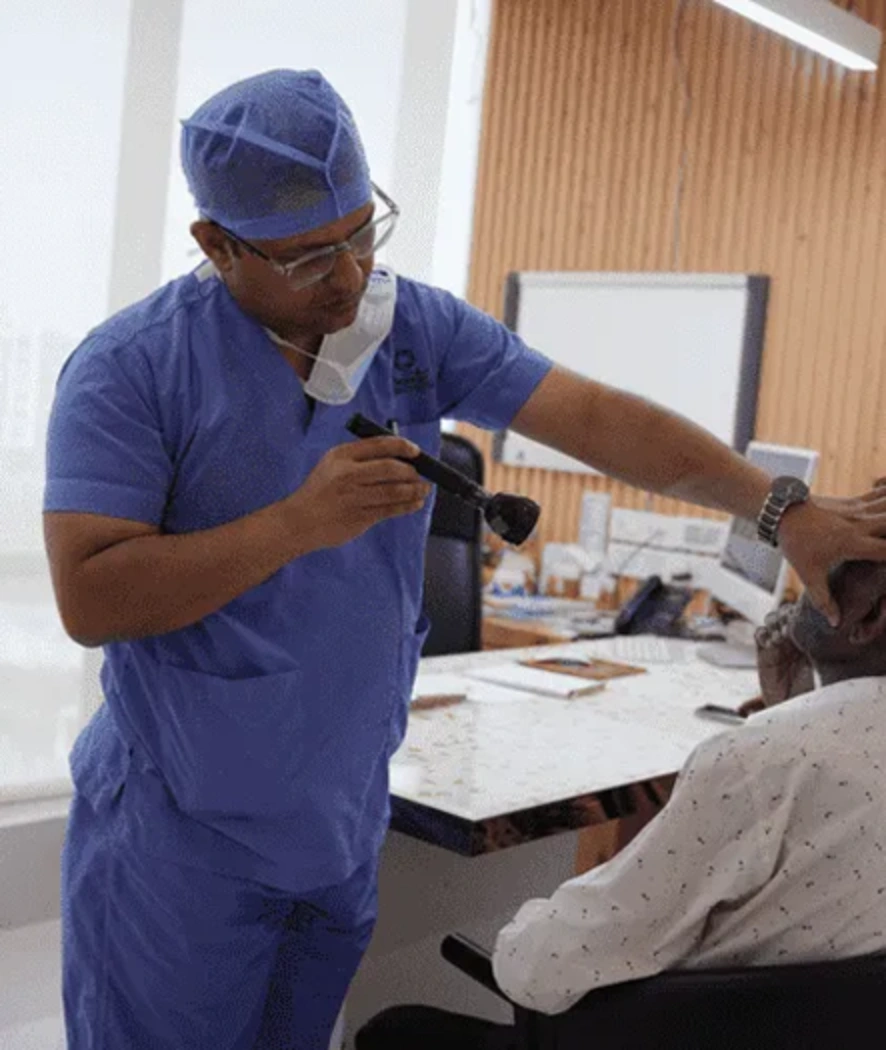
At Dr. Amit Chakraborty’s head and neck oncology practice, the focus is on early detection, precise diagnosis, and comprehensive care for tongue cancer patients.
This article explains what tongue cancer symptoms look like, highlights the early warning signs, and outlines staging, risk factors and treatment options.
Understanding Tongue Cancer
What is Tongue Cancer?
The tongue is divided into two regions: the oral (front) two‑thirds and the base of the tongue, which is part of the oropharynx. Tumours in the front portion are usually called oral tongue cancer, while those in the back portion are referred to as base‑of‑tongue cancer or oropharyngeal cancer. More than 90 % of tongue cancers are squamous cell carcinomas, meaning they arise from the thin, flat cells lining the tongue’s mucous membrane. Although rare overall, tongue cancer is one of the commonest malignancies of the head and neck cancer.
Why Early Detection Matters?
In early stage tongue cancer, prompt treatment offers higher survival and functional recovery. Finding oral cancer early can save lives. Studies show that people who get treated within a month of noticing symptoms have a much better chance of surviving about 86% live for 5 years or more. But if treatment is delayed for 7 months, that chance drops to 47%.
Late diagnosis makes death 2.5 times more likely, while early treatment improves both survival and quality of life.
In one study from Mongolia, the overall 5-year survival rate for oral cancer was 50.3%, but only 38% for tongue cancer. Patients diagnosed at stage IV were 4 times more likely to die than those at stage I. In early-stage tongue cancer, survival dropped from 75% to 50% when cancer spread to nearby lymph nodes, and to 30% when it spread beyond them.
These numbers highlight just how important it is to notice symptoms early and seek help right away.
Early Stage Tongue Cancer and Staging
Tongue cancer is staged using the TNM system, which considers tumour size (T), lymph‑node involvement (N) and metastasis (M). Staging guides treatment and prognostication.
| Stage | Characteristics | Typical 5-year survival* |
| Stage 0 (Carcinoma in situ) | Abnormal cells in the surface layer only. | Very high (close to 100 %) if removed early. |
| Stage 1 tongue cancer | Tumour ≤ 2 cm, confined to tongue and without node involvement. Often called early stage tongue cancer or T1. | 5-year survival can exceed 80–90 %. |
| Stage 2 | Tumour 2–4 cm or a T2 lesion; still no nodal spread. | Survival declines but remains favourable; risk of cervical lymph-node metastasis is about 30 %. |
| Stage 3 | Tumour > 4 cm or any size with a single small lymph node on the same side of the neck. | Significantly reduced survival; often requires combined therapy. |
| Stage 4 | Tumour invades adjacent structures or has multiple/large lymph-node metastases or distant spread (M1). | Poor prognosis; 5-year survival can drop to 45 %. |
*Survival estimates vary across populations and treatment protocols.
Early stages (0 and 1) generally require less extensive surgery and have better functional outcomes.Understanding how the disease progresses is essential when considering treatment options. You can read more about this in our detailed overview of tongue cancer stages and treatment.
In later stages, treatment is more aggressive, and speech or swallowing difficulties are common. When caught early, Stage 1 tongue cancer typically presents as a lesion smaller than 2 cm, with no lymph-node involvement, making it highly treatable.
Tongue Cancer Early Symptoms – What to Watch For
Understanding the signs and symptoms of tongue cancer is key to catching it early. The earliest signs of tongue cancer are often subtle and painless. Recognizing them requires vigilance during self‑exams and routine dental visits. If you notice any of the following persistent changes for two weeks or more, seek professional evaluation.
1. Visible and tactile changes
- Red (erythroplakia) or white (leukoplakia) patches on the tongue. These discolored patches may appear on the top, sides, or underside of the tongue and cannot be scraped off.
- Persistent sore or ulcer that does not heal. A red or greyish ulcer may bleed easily. Unlike canker sores, cancerous ulcers persist beyond two weeks and may feel firm at the base.
- Lump or thickening in the tongue. A painless lump, particularly on the side of the tongue, warrants evaluation.
- Tongue pain or burning sensation. Some patients report a burning feeling or increased sensitivity.
- Changes in surface texture. The tongue may appear rougher, thicker, or swollen.
2. Sensations and functional changes
- Sore throat or feeling of something stuck in the throat.
- Numbness of the tongue or mouth.
- Difficulty chewing or swallowing (dysphagia)
- Ear pain without infection.
- Hoarseness or changes in voice.
- Jaw swelling or loose teeth.
3. Base‑of‑tongue cancer symptoms
Some base of tongue cancer symptoms include persistent sore throat. Cancer in the oropharyngeal (posterior) tongue often presents differently because this area is less visible. Signs may include:
- Persistent sore throat, ear pain, or a feeling of something stuck in the throat.
- Difficulty swallowing and changes in voice.
- Lump in the neck. Enlarged lymph nodes can manifest as a painless mass in the neck.
- Unexplained weight loss or fatigue.
Together, these are among the most common tongue and throat cancer symptoms, especially in cases involving the oropharynx.
4. Cancer under tongue symptoms
Common cancer under tongue symptoms include sores, swelling, or a lump beneath the tongue
Tumors on the underside of the tongue (floor‑of‑mouth region) may cause:
- Sores or ulcers under the tongue.
- Swelling or a mass beneath the tongue or in the floor of the mouth.
- Pain when moving the tongue or difficulty speaking.
- Numbness of the lower tongue.
These symptoms overlap with benign conditions, but persistence or progression should always be evaluated. Early consultation with a dentist or oral surgeon is crucial. If you notice persistent discomfort or changes, consult a specialist to rule out cancer under tongue.
What are the Risk Factors of Tongue Cancer?
Several lifestyle, environmental and biological factors increase the risk of developing tongue cancer. Some are modifiable, while others are inherent. Understanding them can help you take preventive steps and discuss screening with your clinician.
- Tobacco use: Smoking cigarettes, cigars, pipes or using smokeless tobacco and betel nut are among the strongest risk factors. People who both smoke and drink heavily are at especially high risk.
- Alcohol consumption: Heavy alcohol intake is a well‑established risk factor. Combined with smoking, it increases risk multiplicatively.
- Human papillomavirus (HPV) infection: HPV, particularly type 16, is linked to base‑of‑tongue cancer. It can also contribute to oral tongue cancer, though less commonly.
- Betel nut chewing: Common in parts of Asia, betel nut (areca nut) chewing irritates the oral mucosa and increases cancer.
- Poor diet and dental health: Deficiencies in fruits and vegetables and chronic poor oral hygiene contribute to carcinogenesis.
- Medical comorbidities and immunosuppression: Conditions that weaken the immune system, such as HIV, may raise risk.
- Family history and genetics: A personal or family history of head and neck cancers increases risk.
- Age and sex: Tongue cancer is more common in people over 40 and occurs twice as often in men.
How Tongue Cancer Is Diagnosed?
Diagnosis involves a combination of clinical examination and imaging:
- Physical examination: Dentists or physicians look for lesions, palpate the tongue and neck and may use fluorescent lights or dyes to highlight abnormal tissue.
- Endoscopy: A thin, flexible scope may be used to examine the back of the tongue and throat.
- Imaging: MRI, CT or PET scans evaluate tumour size and lymph‑node involvement.
- Biopsy: A definitive diagnosis requires a tissue sample. Fine‑needle aspiration may be used for lymph nodes, while incisional or excisional biopsy confirms the primary tumour.
- HPV testing: Particularly for base‑of‑tongue cancers, HPV testing helps guide prognosis.
For those seeking specialised cancer care, especially in complex or advanced cases, consulting a highly trained head and neck cancer surgeon can make all the difference. At Dr. Amit Chakraborty’s clinic, tongue cancer treatment is planned around each patient’s needs. The focus is on accurate diagnosis, advanced surgical techniques, and coordinated care with oncology specialists to achieve the best possible results.
Treatment Options for Tongue Cancer
Treatment depends on the cancer’s stage, size, location, and the patient’s overall health.
Surgery:
Early‑stage tumors are usually treated with partial glossectomy (removal of part of the tongue). Stage 1 lesions may be managed with surgery alone. As the tumor grows, surgery becomes more extensive and may involve hemiglossectomy, neck dissection to remove lymph nodes, and reconstruction using tissue grafts.
Radiation therapy:
Can be used after surgery (adjuvant) to reduce recurrence risk or as the primary treatment when surgery is not feasible.
Chemotherapy:
Often combined with radiation for advanced stages or recurrent disease.
Targeted therapy and immunotherapy:
Drugs that target specific tumor proteins or enhance immune response are being explored, particularly for metastatic cases.
Clinical trials:
Offer access to experimental therapies.
Early‑stage treatment yields better functional outcomes and allows many patients to retain speech and swallowing ability. Conversely, advanced disease may require tracheostomy, feeding tubes and can profoundly affect quality of life.
Preventive Measures
While not all cases are preventable, certain lifestyle choices can lower the risk:
- Quit smoking and avoid smokeless tobacco. Tobacco use is the single largest modifiable risk factor.
- Limit alcohol consumption. Heavy drinking synergizes with tobacco to increase cancer risk.
- Eat a balanced diet rich in fruits and vegetables. Antioxidants may protect the oral mucosa.
- Practice good oral hygiene and visit your dentist regularly. Dental professionals often detect lesions before they become symptomatic.
- Protect against HPV. HPV vaccination (where available) and safe sexual practices reduce the risk of oropharyngeal cancers.
- Conduct self‑exams. Examine your mouth monthly under good lighting. Use a mirror to inspect the tongue (including underneath), cheeks and gums.
Final Thoughts
Tongue cancer is a relatively uncommon but serious malignancy. It often begins as a small, painless lesion ,red or white patches, a persistent sore, or a lump on the tongue. As the disease progresses, patients may develop pain, numbness, difficulty swallowing, ear pain, and changes in voice. These early-stage symptoms of tongue cancer can easily be mistaken for minor oral problems, but failure to recognize them leads to delayed diagnosis and poorer outcomes.
Recognizing the warning signs and understanding risk factors can empower individuals to seek timely medical care. Regular dental checkups, self‑examinations, and avoiding tobacco and excessive alcohol remain the pillars of prevention. For those diagnosed, advances in surgery, radiotherapy, and systemic therapies offer hope, but early detection remains the most effective way to beat tongue cancer.
Early-stage treatment yields better functional outcomes and allows many patients to retain speech and swallowing ability. Conversely, advanced disease may require tracheostomy, feeding tubes and can profoundly affect quality of life.
For patients looking for comprehensive care and personalised planning, tongue cancer treatment in Mumbai is available through specialized centers offering advanced surgical and medical therapies.



 Apr 07, 2026