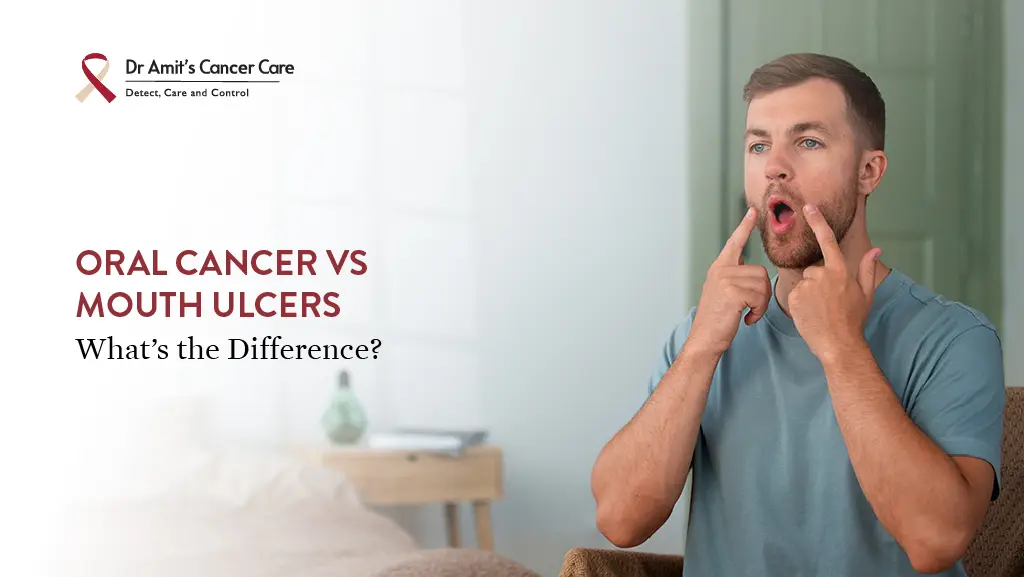

An average person experiences mouth ulcers 2-3 times per year, yet many panic at their first sight, fearing the worst? While mouth ulcers are incredibly common and typically harmless, their resemblance to early oral cancer symptoms creates widespread fear among patients.
Globally, mouth ulcers affect approximately 20% of the population, making them one of the most prevalent oral health conditions. According to recent Indian studies, the prevalence of recurrent mouth ulcers remains high affecting nearly one in five individuals and is consistently found to be more common in women than in men. Despite their commonality, the critical question remains: can mouth ulcers be cancerous?
Telling the difference between harmless mouth ulcers and potentially serious oral lesions can be difficult, even for healthcare professionals. This diagnostic dilemma frequently leads to misdiagnosis in both directions: harmless ulcers are often mistaken for cancer, causing unnecessary distress, while early-stage oral cancers may be dismissed as simple ulcers, potentially delaying life-saving treatment.
Understanding when to worry about oral cancer vs mouth ulcer symptoms is not just about general wellbeing; it’s about survival. While most mouth ulcers heal within 7-14 days without treatment, oral cancers require immediate medical intervention. The key lies in recognizing the subtle yet crucial differences in appearance, duration, pain levels, and healing patterns.
This blog will discuss these conditions in detail, helping you understand their distinct characteristics, prevalence patterns, diagnostic approaches, and treatment protocols. By the end, you will be equipped with the knowledge to make informed decisions about your oral health and know exactly when to seek professional medical attention.
What Are Mouth Ulcers?
Mouth ulcers are small sores that form on your gums, lips, tongue, inner cheeks or roof of your mouth, also commonly known as canker sores or aphthous ulcers. These small, painful sores that develop inside the mouth often appear as round or oval lesions with a white or yellow center and a red border. Unlike cold sores, mouth ulcers are not contagious and develop exclusively inside the mouth on the soft tissues.
The clinical appearance of mouth ulcers is quite distinctive. They are small round or ovoid ulcers 2-4 mm in diameter with an ulcer floor that is initially yellowish but assumes a gray hue as healing and epithelialization proceeds, surrounded by an erythematous halo and some edema. This characteristic appearance helps distinguish them from other oral lesions
What Is Oral Cancer?
Oral cancer is a malignant tumor that develops in any part of the mouth or throat. Oral cancer includes a group of neoplasms affecting any region of the oral cavity, pharyngeal regions and salivary glands. It typically affects people aged 60 and older. Oral cancer affects your lips and the first parts of your tongue, mouth roof and floor. It also affects your oropharynx, the last part of your tongue and roof of your mouth, your tonsils and the sides and back of your throat.
Unlike benign mouth ulcers that heal within days or weeks, oral cancer represents a serious, life-threatening condition that requires immediate medical intervention. The key difference lies in the nature of the cells: while mouth ulcers are temporary disruptions in the normal tissue healing process, oral cancer involves the malignant transformation of healthy cells into cancerous ones that can invade surrounding tissues and spread to distant parts of the body.
Difference Between Mouth Ulcer and Oral Cancer
Understanding the difference between mouth ulcer and oral cancer is crucial for early detection and appropriate treatment. While both conditions affect the mouth, they have distinct characteristics that can help distinguish between them. This oral cancer vs mouth ulcer comparison table provides essential information for recognizing when to seek immediate medical attention.
Comprehensive Comparison Table
|
Characteristic |
Mouth Ulcers (Canker Sores) |
Oral Cancer |
|
Nature |
Benign inflammatory lesions |
Malignant tumors with cancerous cells |
|
Appearance |
Round/oval with white/yellow center and red border |
Irregular, thick, white/red patches or persistent sores |
|
Size |
Usually small (2-10mm), well-defined borders |
Variable size, often larger, poorly defined edges |
|
Healing Time |
7-14 days for minor ulcers, up to 6 weeks for major ones |
Does not heal spontaneously, progressively worsens |
|
Pain Level |
Typically very painful, especially when eating/drinking |
Often painless in early stages, may become painful later |
|
Recurrence |
Frequently recurrent in same individuals |
Single occurrence that doesn’t heal |
|
Bleeding |
Minimal bleeding, usually when irritated |
May bleed easily or spontaneously |
|
Age Group |
Common in children and young adults |
More common in adults over 40-60 years |
|
Location |
Non-keratinized mucosa (cheeks, lips, tongue, floor of mouth) |
Any oral location, often on tongue, floor of mouth, lips |
|
Surrounding Tissue |
Normal tissue around ulcer |
May show white/red patches, thickening, or roughness |
|
Response to Treatment |
Responds well to topical treatments and pain relief |
Requires surgical, radiation, or chemotherapy treatment |
|
Difficulty Swallowing |
Only if large or multiple ulcers |
Progressive difficulty swallowing |
|
Voice Changes |
No voice changes |
May cause hoarseness or speech changes |
|
Weight Loss |
No significant weight loss |
May cause unexplained weight loss |
|
Prognosis |
Excellent, self-limiting condition |
Depends on stage; early detection crucial |
When to Worry: Warning Signs of Oral Cancer
This oral cancer vs canker sore comparison highlights several red flags that distinguish potentially malignant lesions from benign mouth ulcers:
Immediate Medical Evaluation Needed If:
- Any sore that doesn’t heal within 2-3 weeks
- White or red patches that don’t resolve
- Persistent pain without obvious cause
- Numbness in mouth, tongue, or lip
- Difficulty swallowing or speaking
- Unexplained bleeding
- Loose teeth without dental problems
- Swollen lymph nodes in neck
- Persistent ear pain
Typical Mouth Ulcer Characteristics (Generally Safe):
- Small, round sores with clear borders
- Intense pain that improves within days
- Heals completely within 1-2 weeks
- Recurring pattern in same individual
- No associated numbness or swelling
The 2-Week Rule
Dr. Amit Chakraborty recommends the “2-week rule” as a simple guideline: any mouth sore that persists beyond 2 weeks should be evaluated by a dentist or physician immediately. This rule helps distinguish between self-healing mouth ulcers and potentially serious lesions requiring professional assessment.
Understanding the key differences between oral cancer and mouth ulcers helps individuals make informed decisions about their oral health and seek timely medical attention. Early detection of oral cancer greatly improves the chances of successful treatment and survival.
Can a Mouth Ulcer Turn into Cancer?
Mouth ulcers rarely turn into oral cancer on their own. However, certain risk factors and conditions can increase the chances of developing oral cancer in the presence of persistent mouth ulcers.
However, certain biological, environmental, and lifestyle-related risk factors including some linked to viruses found in saliva can increase the chances of malignant transformation in oral tissues.
High-Risk Conditions:
Chronic irritation from ill-fitting dentures, sharp teeth, or repeated trauma
- Tobacco use (smoking, chewing, or smokeless tobacco)
- Heavy alcohol consumption – especially combined with tobacco
- Human papillomavirus (HPV) infection, particularly HPV-16 and HPV-18
- Chronic inflammatory conditions like oral lichen planus
Precancerous Lesions That May Ulcerate:
Leukoplakia – white patches that may develop into cancer
- Erythroplakia – red, velvety patches with higher malignant potential
- Erythroleukoplakia – mixed red and white patches
- Actinic cheilitis – sun-damaged lips
Patient Risk Factors:
- Age over 40-50 years – increased cancer risk
- Male gender – higher incidence in men
- Poor oral hygiene leading to chronic inflammation
- Nutritional deficiencies (iron, folate, vitamin B12)
- Immunosuppression from medications or conditions
- Genetic predisposition to oral cancers
Environmental Factors:
- Chronic sun exposure for lip cancers
- Occupational exposures to chemicals or dust
- Poor dental care leading to persistent irritation
- Betel nut chewing (common in certain cultures)
Diagnosis: How Doctors Tell the Difference
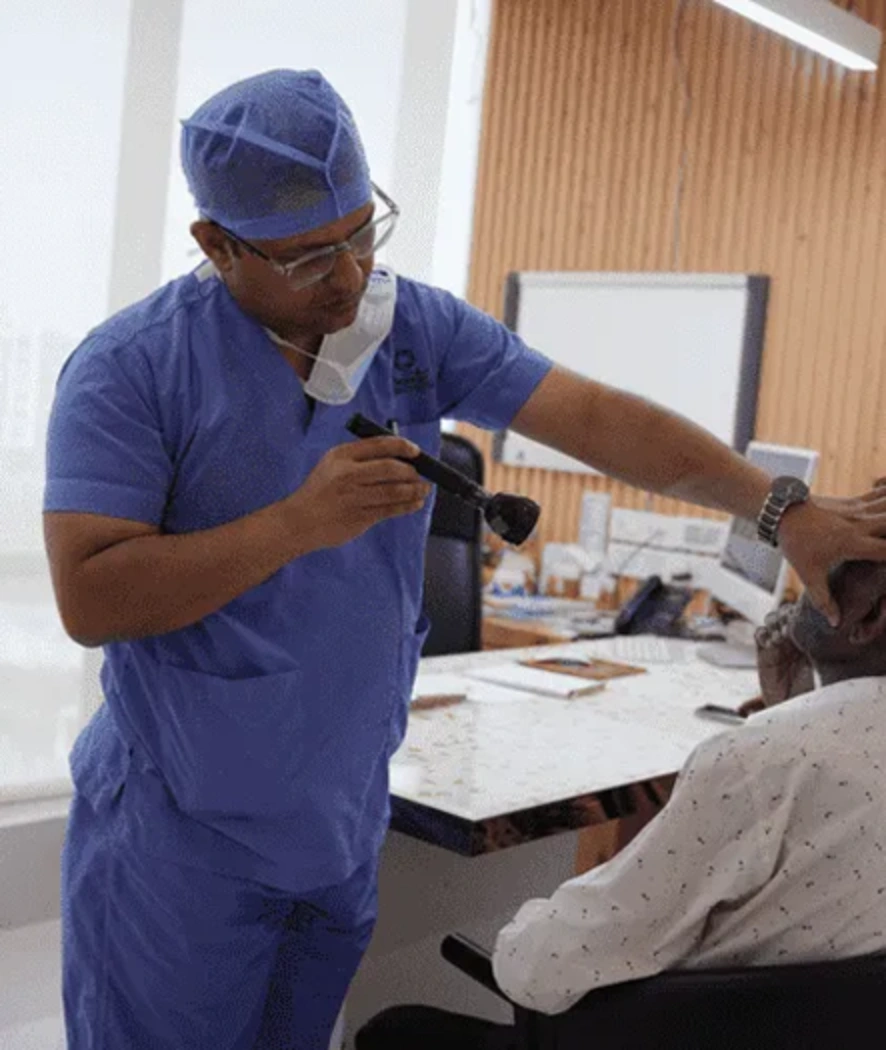
During initial clinical assessment, doctors differentiate between benign mouth ulcers and oral cancer by examining key characteristics such as appearance, texture, healing patterns, and pain levels. Doctors also consider patient risk factors including tobacco use, alcohol consumption, HPV infection, and age when evaluating suspicious oral lesions. This clinical evaluation helps determine whether further diagnostic procedures like biopsy are necessary.
Diagnostic Procedures
When cancer is suspected, doctors typically proceed with:
Biopsy: This is the definitive diagnostic test. A small tissue sample is removed under local anesthesia and examined microscopically by a pathologist. This can be done as an incisional biopsy (removing part of the lesion) or excisional biopsy (removing the entire lesion if small).
Additional tests may include:
CT or MRI scans to assess the extent of disease
Blood tests to check overall health
Examination of lymph nodes in the neck
Conclusion
Early detection and accurate diagnosis are crucial when dealing with oral lesions. While most mouth ulcers are benign and heal naturally, distinguishing between harmless ulcers and potentially serious conditions like oral cancer requires professional medical evaluation. Recognizing the distinction between oral cancer vs mouth ulcer is essential, as early signs can be subtle. The combination of thorough clinical assessment and appropriate diagnostic procedures, including biopsy when necessary, ensures that patients receive the correct diagnosis and timely treatment. Do not ignore persistent oral symptoms or dismiss them as minor issues, early intervention can make a significant difference in treatment outcomes. If you’re experiencing persistent mouth ulcers, unusual oral lesions, or have concerns about your oral health, don’t wait for symptoms to worsen. Professional evaluation and peace of mind are just a consultation away.
Schedule Your Consultation Today
Dr. Amit Chakraborty and his experienced team are dedicated to providing comprehensive oral health care and accurate diagnosis of oral conditions. With advanced diagnostic facilities and years of expertise in oral medicine, Dr. Amit Chakraborty can help distinguish between benign mouth ulcers and more serious conditions, ensuring you receive the appropriate care you need.
Take the first step toward better oral health – book your appointment today.


 Oct 04, 2025