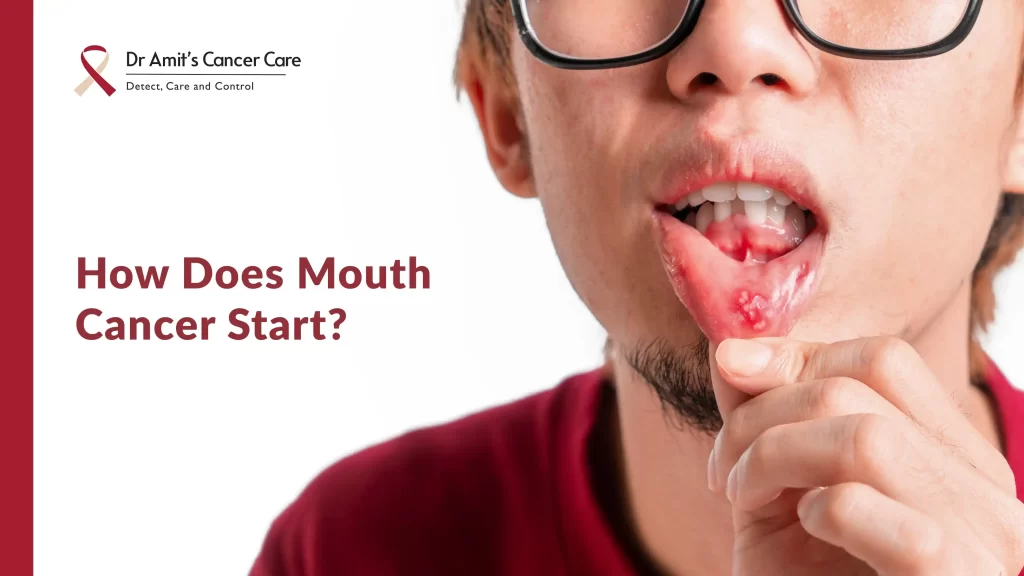

Most people don’t realise that mouth cancer often starts with something small and easy to ignore. A tiny white patch. A sore that doesn’t heal. A rough area on the tongue that feels “a bit different”. These early signs are usually painless, which is why many patients overlook them until they become serious. This is why it’s important to understand how does a mouth cancer start and what the very first changes look like.
In this blog, you’ll learn how does cancer start in mouth tissues, what damages these cells, and how pre-cancerous patches begin to form. We also explain the major risk factors, early symptoms you shouldn’t ignore, and simple steps that can help you prevent mouth cancer or catch it early.
Where Does Mouth Cancer Actually Begin?
How does cancer start in mouth tissues? Your mouth is lined with cells that form a protective layer across your lips, tongue, cheeks, and gums. Normally, these cells grow, perform their function, and die in an orderly manner to make room for new cells.
Cancer disrupts this pattern. When DNA inside these cells becomes damaged, they start behaving abnormally. Instead of dying when they should, they continue multiplying, eventually forming a tumour. This process doesn’t happen overnight. Oral cancer typically develops gradually over years.
The damage occurs when genes controlling cell growth get corrupted. The cellular “brakes” that stop division fail, whilst the “accelerators” get stuck in the “on” position. This combination allows cells to divide uncontrollably.
Pre-Cancerous Changes in the Oral Cavity
Cancer rarely appears suddenly. Pre-cancerous conditions often develop first, giving you a chance to intervene. These show up as visible changes:
- White patches (leukoplakia) that can’t be scraped off indicate abnormal cell growth.
- Red patches (erythroplakia) that may bleed slightly carry a higher cancer risk.
- Mixed red and white patches also need close monitoring.
These changes mean cells are developing abnormally but haven’t become cancerous yet. Regular dental visits can catch these early, allowing treatment before progression. According to Cancer Research UK, early detection dramatically improves survival rates.
What Damages Your Mouth Cells?
How does mouth cancer start at the DNA level? Your cells have natural repair systems, but repeated exposure to harmful substances overwhelms these defences.
- Tobacco smoke contains over 70 cancer-causing chemicals. Every cigarette, bidi, or gutkha pouch exposes your mouth’s tissues to these substances. Chewing tobacco creates direct, prolonged contact between carcinogens and mouth tissues.
- Alcohol creates a harsh environment that damages cells whilst blocking natural repair mechanisms. When combined with tobacco, the risk multiplies exponentially.
- HPV (human papillomavirus), particularly type 16, integrates its genetic material into cells, disrupting normal growth control. HPV-related oral cancers are increasing, especially in the throat and tongue base.
Chronic irritation from poor oral hygiene, ill-fitting dentures, and persistent rubbing also contributes to DNA damage over time.
Major Risk Factors of Mouth Cancer
Understanding how does cancer start in mouth helps you identify what increases risk:
- Tobacco use remains the biggest controllable risk factor. This includes smoking and smokeless forms like gutkha and paan.
- Heavy alcohol consumption amplifies tobacco’s effects. Together, they multiply your risk far beyond either alone.
- HPV infection through sexual contact increases risk, particularly for throat cancers.
- Poor nutrition lacking fruits and vegetables weakens your body’s natural defences.
- Age and gender play roles. Most cases affect people over 40, and men face twice the risk of women, though this gap is narrowing.
- Sun exposure increases lip cancer risk for those spending considerable time outdoors.
Warning Signs of Mouth Cancer to Recognise
Early oral cancer produces signs you shouldn’t ignore:
- Mouth sores not healing within two weeks
- White or red patches that change or persist
- Unexplained bleeding in the mouth
- Lumps or thickening in cheeks, neck, or throat
- Difficulty chewing or swallowing
- Persistent sore throat or hoarseness
- Numbness in tongue or lips
The key feature distinguishing cancer from harmless conditions is persistence. Normal mouth sores heal within two weeks. If anything unusual lasts beyond three weeks, Consult a head and neck specialist.
Prevention Steps for Mouth Cancer
Knowing how does a mouth cancer start empowers you to interrupt the process:
- Quit tobacco in all forms. Your risk starts declining within years of quitting.
- Limit alcohol consumption or avoid it completely.
- Eat nutritious foods rich in fruits and vegetables to support cell health.
- Maintain oral hygiene through regular brushing, flossing, and dental visits.
- Protect your lips with SPF lip balm when outdoors.
- Get HPV vaccination for recommended age groups.
- Self-examine monthly using good lighting to check all mouth surfaces for changes.
The Importance of Regular Screening
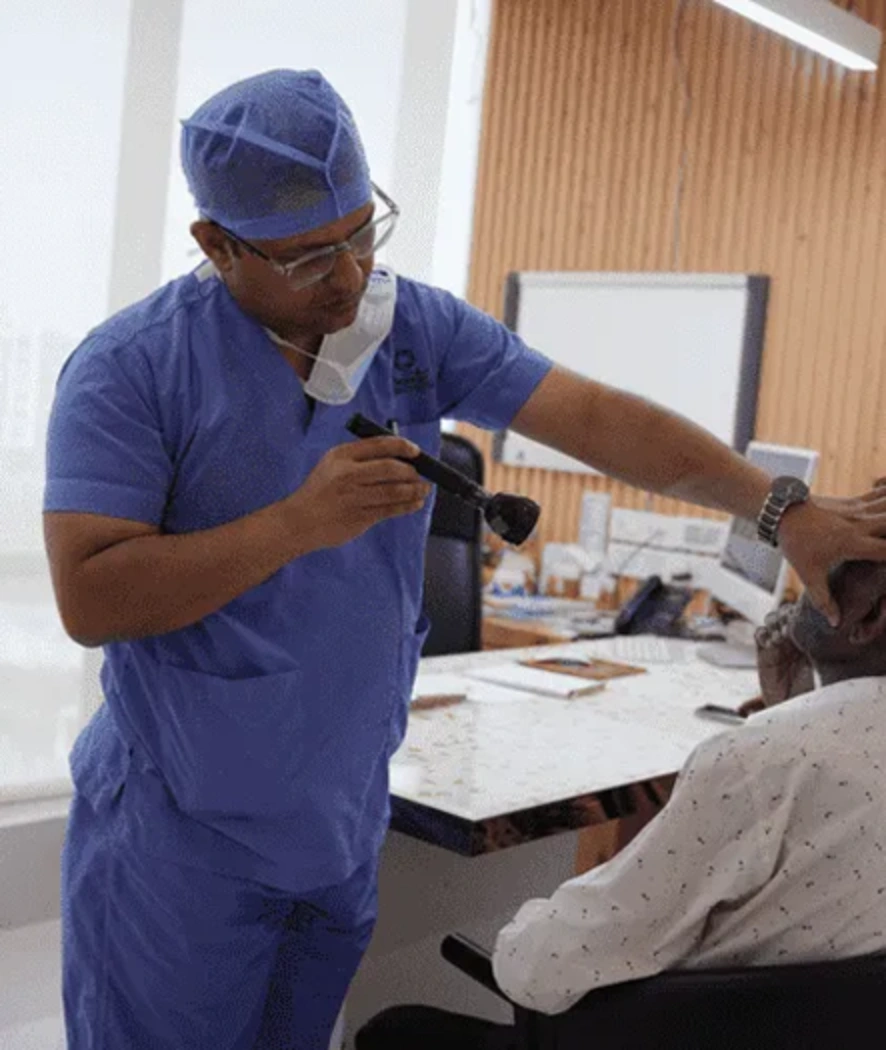
Regular dental check-ups include oral cancer screening. These painless examinations can detect suspicious changes before you notice symptoms.
Screening becomes crucial if you use tobacco, drink alcohol regularly, or have other risk factors. Dr Amit Chakraborty and his team specialise in comprehensive head and neck cancer evaluation, offering expertise in early detection and diagnosis.
Conclusion
Mouth cancer does not start suddenly. It begins with small, gradual changes in the cells lining your mouth, often triggered by tobacco, alcohol, HPV infection, or long term irritation. Understanding how does a mouth cancer start and how does cancer start in mouth tissues helps you recognise early warning signs like persistent sores, white or red patches, and unexplained lumps.
If you notice any changes that don’t heal or if you have risk factors such as tobacco or alcohol use, early evaluation is essential. Dr Amit Chakraborty and his team specialise in the early detection and treatment of oral cancers, offering expert guidance and personalised care at every stage. Reaching out early can make a significant difference in outcomes and give you the clarity and reassurance you need about your oral health.
Reference:
- Cancer Research UK. (2024, September 25). Survival for mouth and oropharyngeal cancer. https://www.cancerresearchuk.org/


 Mar 13, 2026