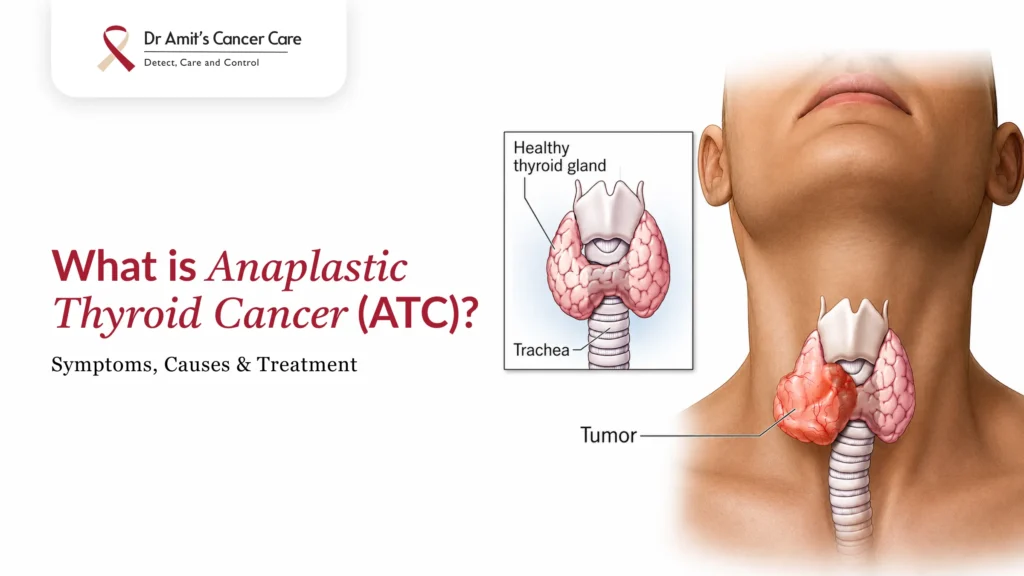

Anaplastic thyroid cancer, commonly known as ATC, is a type of thyroid cancer. It is one of the dangerous types, which highlights the need for early detection and treatment.
Though there is no specific medically proven cause, ATC may be linked with certain thyroid disorders, and the main symptom is a rapid, swelling-like mass on the neck, developed within days.
It is usually diagnosed using biopsy and imaging scans, and treatment may include surgery, chemotherapy, and radiotherapy.
What is Anaplastic Thyroid Cancer?
Anaplastic thyroid cancer (ATC) is a rare and extremely aggressive type of thyroid cancer. It generally grows rapidly and may frequently spread to other parts of your body.
It is responsible for 1.7% of all thyroid cancers. (Smallridge, R.C. et al 2010). It is considered severe since the patients have an average survival of 5 months, and less than 20% survive 1 year.
Because the disease spreads quickly to the nearby tissues and is deep-seated, every case of anaplastic thyroid cancer is automatically classified as Stage IV, regardless of the tumour’s original size (Bible et al., 2021).
Anaplastic Thyroid Cancer Symptoms
The most common symptoms of anaplastic thyroid cancer reported include:
- A neck mass that enlarges rapidly over days to weeks
- Hoarseness or voice changes, caused by pressure on or invasion of the recurrent laryngeal nerve
- Dysphagia (difficulty swallowing) or a sensation of food getting “stuck”
- A hard, fixed neck mass that does not move freely on swallowing.
- Dyspnoea (breathing difficulty), particularly in advanced local disease.
- Neck pain, sometimes radiating to the jaw or ear
- Palpable cervical lymphadenopathy, since regional lymph node involvement is common at presentation (Smallridge et al., 2012; Bible et al., 2021)
Symptoms of ATC differ from the early signs and symptoms of other thyroid cancers. Most differentiated thyroid cancers are silent. Patients feel completely fine, and the nodule is found incidentally on a scan. However, anaplastic thyroid cancer is different since the symptoms are quite explicit, often within just a few weeks.
Any neck lump that is growing quickly should be evaluated with an urgent ultrasound and fine-needle aspiration biopsy rather than using a wait-and-watch strategy because the tumour can progress noticeably within weeks. Our head and neck cancer team prioritises a similar window evaluation for exactly this reason.
Early evaluation can help identify concerning thyroid symptoms sooner and support timely, appropriate treatment. Consult Dr. Amit Chakraborty and his team for a comprehensive assessment.
Causes of Anaplastic Thyroid Cancer
The causative factors of anaplastic thyroid cancer do not include a single definitive cause (Alhejaily et al., 2023).
What research does show is a pattern rather than one cause:
Pre-existing or coexisting thyroid disease
A majority of ATC cases develop in the people who are suffering from or have a history of an already-differentiated thyroid cancer, most often papillary thyroid cancer.
Longstanding goitre
A longstanding enlarged thyroid gland is a recognised association in multiple case series.
Genetic mutation
ATC carries a distinct and heavily mutated molecular profile. It is often associated with many genetic mutations, especially BRAF V600E.
Prior head and neck radiation exposure
A history of radiation to the neck or chest region has been identified as a contributing risk factor as well as a causative factor.
Age
Age is one of the strongest and most consistent patterns seen in this disease. Anaplastic thyroid cancer typically affects older adults, in the late 60s and it is uncommon before the age of 50.
Histology of Anaplastic Thyroid Cancer
Anaplastic thyroid cancer histology features highly aggressive, undifferentiated cells with marked pleomorphism, frequent atypical mitoses, and extensive necrosis. The primary growth patterns consist of spindle (sarcomatoid) cells, pleomorphic giant cells, and epithelioid/squamoid cells.
Don’t worry if you are confused reading the above technical terms. Following is a detailed explanation for the same.
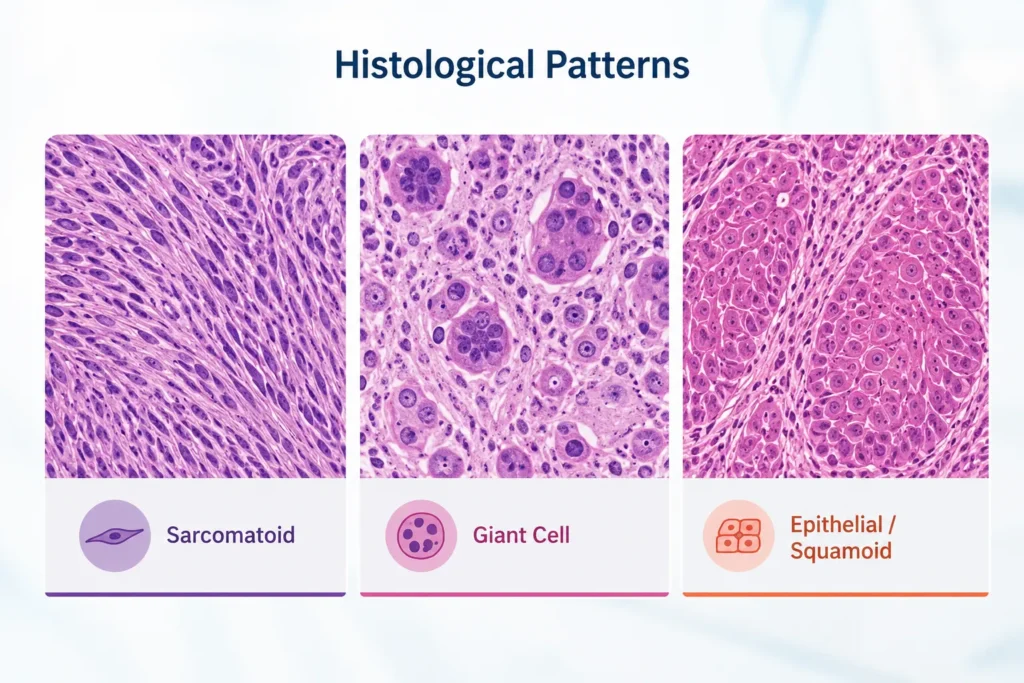
Histology is the study of the tumour cells under a microscope. Research suggests three broad anaplastic thyroid cancer histology patterns, which may occur alone or mixed within the same tumour (Xu et al., 2020; Alhejaily et al., 2023):
| Histological pattern | Typical microscopic appearance |
| Sarcomatoid | Malignant spindle-shaped cells resembling a high-grade sarcoma (cancer) |
| Giant cell | Highly pleomorphic malignant cells, some multinucleated |
| Epithelial / squamoid | Cohesive nests of squamous-like cells with abundant eosinophilic cytoplasm |
Because these patterns overlap with several other cancers, an experienced pathology and surgical oncology team is essential to reach an accurate, timely diagnosis.
This is one of the reasons multidisciplinary planning from the very first consultation matters so much for ATC.
Diagnosing Anaplastic Thyroid Cancer
The medical assessment for the anaplastic thyroid cancer includes:
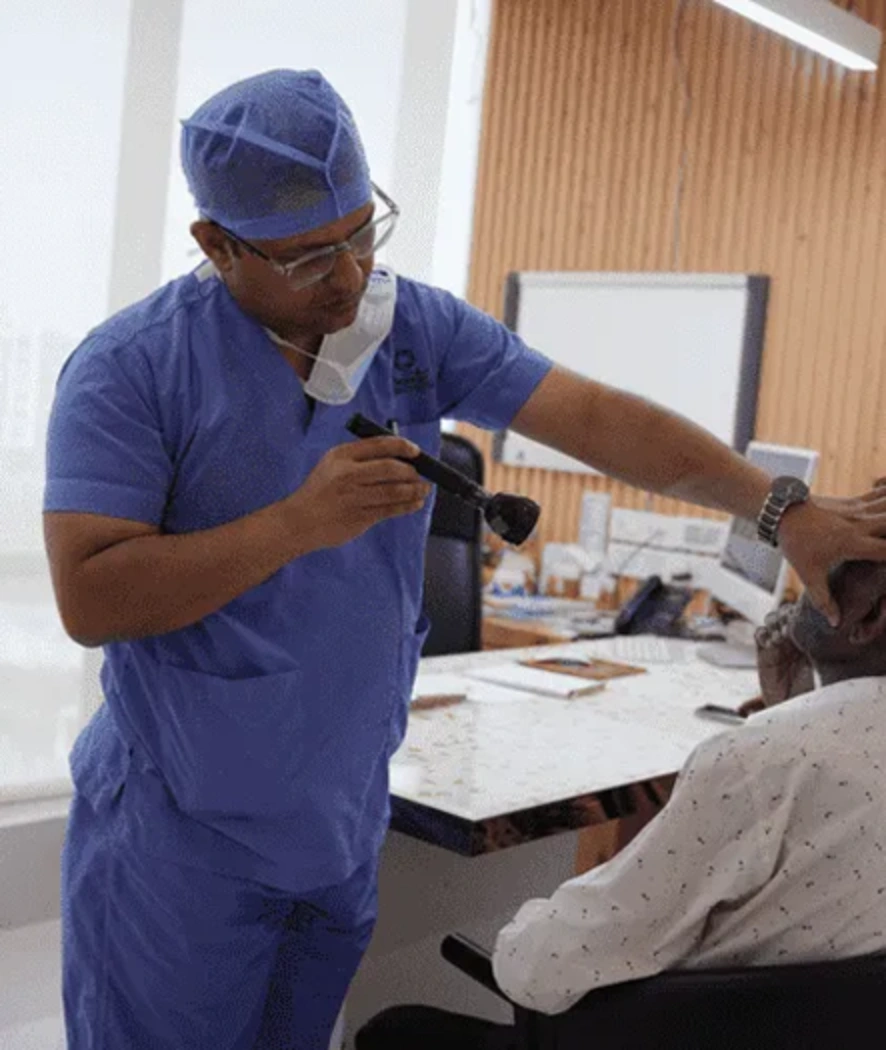
- Clinical examination of the neck for a hard, fixed, rapidly enlarging mass
- Ultrasound-guided fine-needle aspiration or core biopsy of the thyroid and any enlarged lymph nodes
- Cross-sectional imaging (CT of the neck and chest, and often PET-CT) to rule out local invasion and screen for distant spread to the lungs, bones, or brain
- Laryngoscopy, to assess whether the vocal cords are already affected
- Molecular/genetic testing of the biopsy sample, specifically for the BRAF V600E mutation, since this directly changes systemic treatment options
Given how quickly ATC evolves, this entire assessment is done within days and not weeks, for which our experienced, dedicated team is available even if you have already gone through the anaplastic thyroid cancer tests and wish to take a second opinion.
Anaplastic Thyroid Cancer Treatment
The treatment for anaplastic thyroid cancer shall be rapid comprehensive care, including surgery, external beam radiation therapy, and chemotherapy.
Since the disease has a rapid progress, a combination of the treatments is prescribed rather than relying on one single treatment.
The right combination depends on:
- The anaplastic thyroid cancer stage (IVA, IVB, or IVC)
- Whether the tumour is surgically resectable
- Whether the tumour carries a BRAF mutation
According to the current guidelines of the American Thyroid Association, rapid evaluation and a multidisciplinary treatment approach are advisable for optimum outcomes
Broadly, anaplastic thyroid cancer treatment includes:
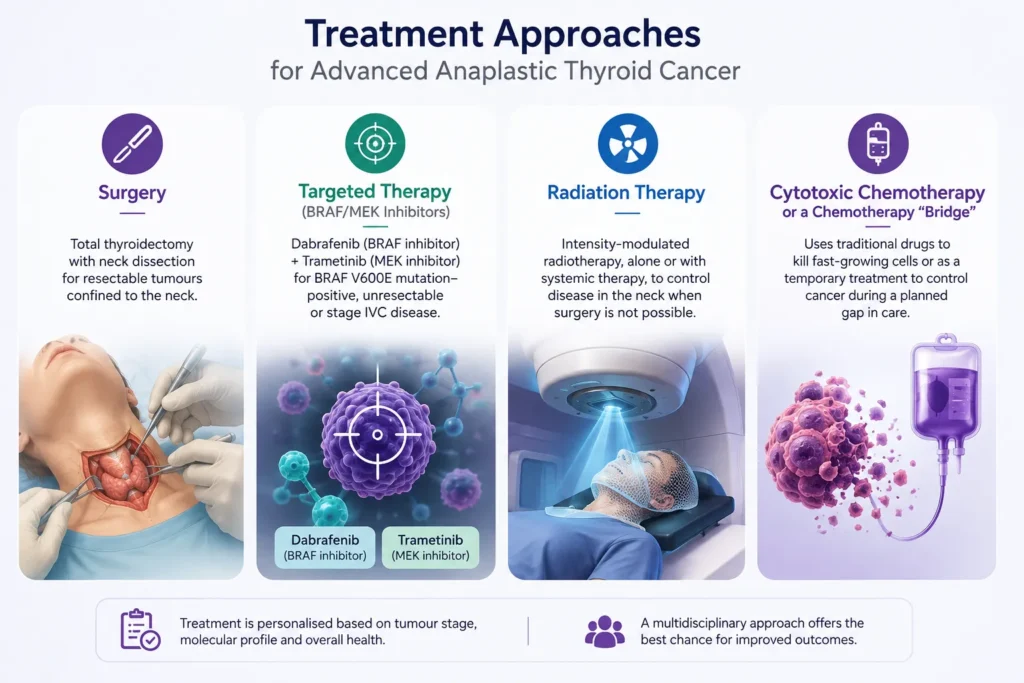
Surgery
For tumours confined to the neck, a total thyroidectomy with neck dissection shall be a suitable approach. (Bible et al., 2021).
Many patients present with disease that is not immediately operable, in which case, systemic therapy is used first to shrink the tumour before surgery is reconsidered.
Targeted therapy (BRAF/MEK inhibitors)
For patients whose tumour carries the BRAF V600E mutation (abnormal variation in gene), combining dabrafenib (a BRAF inhibitor) with trametinib (a MEK inhibitor) has meaningfully changed outcomes for this subgroup.
This combination is now recommended as an initial option for the tumours which cannot be surgically excised for stage IVC disease (Bible et al., 2021).
Radiation therapy
Intensity-modulated radiotherapy, used alone or alongside systemic therapy to control disease in the neck when surgery is not possible.
Cytotoxic chemotherapy or a chemotherapy “bridge”
Cytotoxic chemotherapy uses traditional drugs to kill fast-growing cells, while a chemotherapy “bridge” (bridging therapy) is a temporary treatment given to control cancer growth during a planned gap in care.
Along with these treatment modalities, airway and nutrition support is also an important factor to be considered.
Because ATC can compress the airway and oesophagus, a tracheostomy or feeding tube may be needed early, not as a sign that treatment has failed, but as supportive care that keeps a patient stable enough to receive further therapy (Smallridge et al., 2012).
Note: Testing the tumour for BRAF mutation status as early as possible changes the entire treatment conversation, because it opens the door to targeted therapy that has meaningfully improved outcomes. (Subbiah et al., 2018; Bible et al., 2021).
If you or your loved one is already suffering from anaplastic thyroid cancer and considering surgery as part of your treatment plan, learn more on how modern thyroid surgery techniques compare, and discuss resectability with our experienced oncosurgeon, Dr. Amit Chakraborty.
Anaplastic Thyroid Cancer Survival Rate
Since it is fatal, anaplastic thyroid cancer has a survival rate of not more than a year.
According to research, the median survival was 3.16 months, which did not improve significantly over the study period (Lin et al., 2019).
Another study concluded that the overall survival rate was as follows:
1-Year Overall Survival: 36%
2-Year Overall Survival: 17%
3-Year Overall Survival: 13%
5-Year Overall Survival: 11%
With a median survival of 9 months (Xu et al., 2020)
However, these numbers are the average and not an individual story. The survival rate of anaplastic thyroid cancer varies considerably based on:
- Stage at diagnosis
- Whether the tumour can be surgically resected
- BRAF mutation status
- Age and overall fitness at diagnosis
Explore what Dr. Amit Chakraborty has to say about the late-stage thyroid cancer and its survival rate.
Late-stage thyroid cancer survival rate | Prognosis of thyroid cancer | Dr. Amit Chakraborty
Why Speed and Specialist Input Matter So Much
Every guideline and every published case series on this disease converges on the same point: anaplastic thyroid cancer is a medical emergency the moment it is suspected, and rapid evaluation with a multidisciplinary team approach is imperative for optimum management (Smallridge et al., 2012; Bible et al., 2021).
A neck lump that is growing week to week, with or without voice change or swallowing difficulty, should reach a head and neck cancer specialist for urgent biopsy and imaging rather than a routine outpatient queue.
Take the Next Step
If you or someone you love has a neck lump that is growing quickly or has just received a diagnosis of anaplastic thyroid cancer, timely, expert evaluation is the single factor within your control.
Dr. Amit Chakraborty is a leading Head and Neck Surgical Oncologist in Mumbai with over 15 years of experience, offering comprehensive thyroid cancer care and working alongside medical and radiation oncology colleagues to fast-track diagnosis, BRAF testing, and treatment planning for aggressive thyroid cancers.
Book a consultation at Dr Amit’s Cancer Care.
Call or WhatsApp: +91 86577 17988
Dr. Amit Chakraborty and his team provide comprehensive thyroid cancer care, with a focus on prompt evaluation, appropriate testing and coordinated treatment planning.
References
- Smallridge, R.C. and Copland, J.A., 2010. Anaplastic thyroid carcinoma: pathogenesis and emerging therapies. Clinical oncology, 22(6), pp.486-497.
- Wiseman, S.M., Masoudi, H., Niblock, P., Turbin, D., Rajput, A., Hay, J., Filipenko, D., Huntsman, D. and Gilks, B., 2006. Derangement of the E-cadherin/catenin complex is involved in transformation of differentiated to anaplastic thyroid carcinoma. The American journal of surgery, 191(5), pp.581-587.
- Akaishi, J., Sugino, K., Kitagawa, W., Nagahama, M., Kameyama, K., Shimizu, K., Ito, K. and Ito, K. (2011) ‘Prognostic factors and treatment outcomes of 100 cases of anaplastic thyroid carcinoma’, Thyroid, 21(11), pp. 1183–1189.
- Alhejaily, A.G., Alhuzim, O. and Alwelaie, Y. (2023) ‘Anaplastic thyroid cancer: Pathogenesis, prognostic factors and genetic landscape (Review)’, Molecular and Clinical Oncology, 19(6), p. 99.
- Bible, K.C., Kebebew, E., Brierley, J., Brito, J.P., Cabanillas, M.E., Clark, T.J., Di Cristofano, A., Foote, R., Giordano, T., Kasperbauer, J., Newbold, K., Nikiforov, Y.E., Randolph, G., Rosenthal, M.S., Sawka, A.M., Shah, M., Shaha, A., Smallridge, R. and Wong-Clark, C.K. (2021) ‘2021 American Thyroid Association Guidelines for Management of Patients with Anaplastic Thyroid Cancer’, Thyroid, 31(3), pp. 337–386.
- Cabanillas, M.E., Zafereo, M., Gunn, G.B. and Ferrarotto, R. (2016) ‘Anaplastic Thyroid Carcinoma: Treatment in the Age of Molecular Targeted Therapy’, Journal of Oncology Practice, 12(6), pp. 511–518.
- Kebebew, E., Greenspan, F.S., Clark, O.H., Woeber, K.A. and McMillan, A. (2005) ‘Anaplastic thyroid carcinoma: Treatment outcome and prognostic factors’, Cancer, 103(7), pp. 1330–1335.
- Lin, B., Ma, H., Ma, M., Zhang, Z., Sun, Z., Hsieh, I.-Y., Okenwa, O., Guan, H., Li, J. and Lv, W. (2019) ‘The incidence and survival analysis for anaplastic thyroid cancer: a SEER database analysis’, American Journal of Translational Research, 11(9), pp. 5678–5686.
- Smallridge, R.C., Ain, K.B., Asa, S.L., Bible, K.C., Brierley, J.D., Burman, K.D., Kebebew, E., Lee, N.Y., Nikiforov, Y.E., Rosenthal, M.S., Shah, M.H., Shaha, A.R. and Tuttle, R.M. (2012) ‘American Thyroid Association guidelines for management of patients with anaplastic thyroid cancer’, Thyroid, 22(11), pp. 1104–1139.
- Subbiah, V., Kreitman, R.J., Wainberg, Z.A., Cho, J.Y., Schellens, J.H.M., Soria, J.C., Wen, P.Y., Zielinski, C., Cabanillas, M.E., Urbanowitz, G., Mookerjee, B., Wang, D., Rangwala, F. and Keam, B. (2018) ‘Dabrafenib and Trametinib Treatment in Patients With Locally Advanced or Metastatic BRAF V600–Mutant Anaplastic Thyroid Cancer’, Journal of Clinical Oncology, 36(1), pp. 7–13.
- Xu, B., Fuchs, T., Dogan, S., Landa, I., Katabi, N., Fagin, J.A., Tuttle, R.M., Sherman, E., Gill, A.J. and Ghossein, R. (2020) ‘Dissecting Anaplastic Thyroid Carcinoma: A Comprehensive Clinical, Histologic, Immunophenotypic, and Molecular Study of 360 Cases’, Thyroid, 30(10), pp. 1505–1517.


 Sep 18, 2024