
You look at your lips every day. In the mirror. In passing. Without a second thought. That is exactly why trouble can sit there unnoticed, hiding behind the familiar.
Lip cancer symptoms rarely arrive with drama. It slips in quietly. Borrowing the face of everyday problems like dryness, a stubborn crack, a sore that just won’t make up its mind and heal.
Sun exposure. Weather, stress. There is always a reasonable excuse ready. And most people take it.
Lip cancer often goes unnoticed because it looks ordinary in its earliest stage. What seems harmless can slowly deepen, spreading beneath the surface while life carries on as usual.
Understanding the signs and symptoms of lip cancer is less about fear and more about educating yourself about it. Awareness does the heavy lifting long before scans, biopsies, or treatment decisions ever enter the picture. When you know what to watch for, the mirror stops being routine. It becomes an early warning system.
Let us delve further into signs and symptoms of lip cancer…
What Is Lip Cancer and Why Is the Lip Vulnerable?
What is lip cancer? At its core, lip cancer is a type of oral cancer that begins in the cells lining the lip. Most often, it starts right where the skin meets the mouth. The border that works overtime and rarely gets much sympathy. The lip is tough, but it’s also exposed. Constantly.
Here’s why that matters.
1. The Lip Lives Outdoors
Unlike most parts of the mouth, the lips spend their lives uncovered. They face the sun every day. Morning walks. Long drives. Waiting at traffic lights. Years stack quietly.
Sun damage doesn’t always burn. Often, it accumulates. Cell by cell. This long-term exposure is one of the biggest reasons lower lip cancer symptoms appear more frequently than upper lip changes.
Think of it like fabric left in sunlight. It doesn’t tear on day one. It weakens slowly.
2. The Skin Here Is Thin and Honest
Lip skin is thinner than facial skin. That’s good news and bad news.
Good, because early changes are often visible. Bad, because damage has less distance to travel.
This is why many early symptoms of lip cancer show up on the surface first. Those are small, visible, and deceptively calm. The body isn’t hiding the issue. We are just not trained to question it.
3. Most Lip Cancers Start Small
Lip cancer rarely begins as a large mass. It usually starts as a tiny ulcer. A flat patch. Or a slight thickening
Nothing cinematic. Nothing that screams “medical emergency.”
This slow beginning is exactly why the signs and symptoms of lip cancer are often dismissed. People expect cancer to look aggressive. Early lip cancer looks patient.
4. Why the Lower Lip Takes the Hit
If lips had a hierarchy of risk, the lower lip would be first in line. Why? Because it catches more sunlight. It protrudes slightly. And it is less protected by natural shade
That’s why clinicians pay close attention to lower lip cancer symptoms. Even when they appear subtle. Not because they are common. But because they are predictable.
5. Why Awareness Beats Assumptions
Lip cancer doesn’t require advanced technology to notice early. It requires attention.
Most delays happen not because people don’t care but because they don’t connect persistence with risk. Once that connection clicks. The entire picture changes.
So now the question becomes practical. What should you actually look for when checking your lips?
Not everything. Just the things that matter.
Why is Early Lip Cancer Easy To Overlook?
If lip cancer wore a warning label, this article would be unnecessary. But it doesn’t. It blends in your daily life. The early symptoms of lip cancer are often ignored not because people are careless but because the signs are familiar. Too familiar.
Let’s break down the most common signs and symptoms of lip cancer.
1. The “Just a Sore” That Won’t Commit to Healing
Everyone gets lip sores. Bites happen. Dryness happens.
So when a sore shows up and overstays its welcome, most people negotiate with it.
“One more week.”
“After this weather clears.”
“Once work slows down.”
Here’s the quiet red flag:
A sore that doesn’t fully heal after two to three weeks, even if it seems to improve and worsen in cycles.
Cancer doesn’t always rush. Sometimes it lingers. And that lingering is the clue.
2. A Crack That Keeps Reopening in the Same Spot
Dry lips split. That’s normal.
What isn’t normal is the same crack reopening in the same place, again and again.
This is one of the most overlooked signs and symptoms of lip cancer. Especially in people with long-term sun exposure. The surface heals. The deeper change does not.
Think of it like paint peeling because the wall underneath is damp. You can repaint forever. The problem keeps returning.
3. A Patch That Looks Different but Not “Serious”
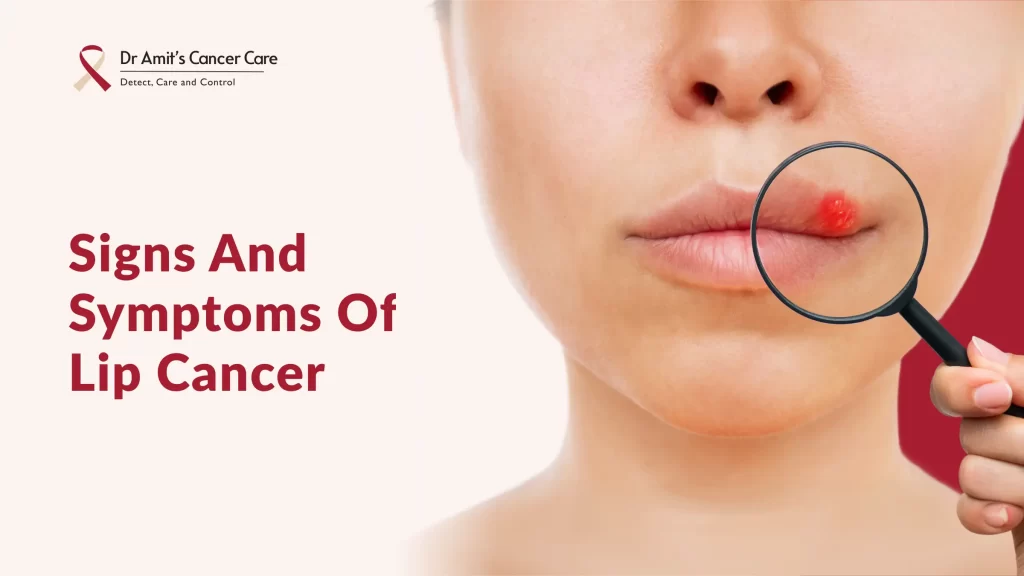
Early lip cancer can look like a pale or white patch, a red area that feels a bit rough, or a spot that feels thick and scaly.Nothing alarming on its own. No pain. No bleeding. No urgency.
But texture changes matter. Skin that feels different is often more important than skin that looks dramatic. This is how lip cancer symptoms quietly announce themselves with ease.
4. Subtle Swelling That Doesn’t Hurt
Pain grabs attention. Swelling without pain does not.
A small puffiness on the lip or a hard spot under the skin can stay unnoticed for a long time. People think it is just irritation. Or a small injury. Or nothing at all.
Early tumors on the lower lip often grow slowly and silently because this area gets the most sun exposure. That’s why the lower lip is more prone to cancer.
5. Bleeding That Seems Random
A small bleed after brushing teeth. A scab that flakes off and leaves a red base. It feels incidental. Accidental. Forgettable.
But bleeding without obvious injury especially when it repeats is the body clearing its throat. Not shouting. Clearing.
Remember, early lip cancer doesn’t announce itself with pain. It repeats itself. Same spot. Same issue. Same story. Over time.
So when does “ordinary” stop being ordinary? How long is too long to wait before getting something checked? That line matters more than most people realize.
How Does Early Attention Change Everything?
Timing is quiet. It doesn’t announce itself. It just keeps score.
When people hear “Lip cancer,” they imagine complexity right away. Big procedures. Long recoveries. Life put on pause. That picture is often built from late stories and not early ones. Early attention rewrites the script.
1. Early Lip Cancer Is Often Smaller Than the Fear Around It
In the early stage, lip cancer usually stays local. Small area. Clear edges. Limited depth.
That matters because size dictates options. And options dictate how much of your daily life gets disturbed.
Most early symptoms of lip cancer appear before the disease has learned how to spread. That window is where outcomes shift quietly but dramatically. Think of it like fixing a loose tile versus rebuilding a floor. Same room. Very different effort.
2. Earlier Checks Often Mean Less Intervention
There’s a common misconception that seeing a doctor early leads to aggressive treatment. In reality, it often does the opposite.
Early evaluation means simpler procedures. Better preservation of lip shape and movement. Faster recovery. Waiting doesn’t make treatment gentler. It usually makes it more involved.
This is why doctors place so much weight on recognizing signs and symptoms of lip cancer early. Because the body is more cooperative before scars deepen.
3. Function Matters as Much as Removal
Lips aren’t decorative. They work. They help you speak clearly. Eat comfortably. Express emotion without thinking about it. Early care increases the chance those functions stay intact.
This is especially true for lower lip cancer symptoms, where delay can affect movement and sensation more than people expect.
Early action protects not just health but quality of life as well.
4. Certainty Calms the Mind
Uncertainty drains energy. That low-level worry that hums in the background, “Should I be concerned?” “ Am I overreacting?” Often causes more stress than answers ever do.
Getting something checked doesn’t commit you to treatment. It commits you to information. And information steadies decisions.
Most people who seek early evaluation say the same thing afterward, “I wish I’d done this sooner.”
5. Awareness Is the Real Advantage
Technology matters. Expertise matters. But awareness comes first.
You don’t need advanced tools to notice a change. You just need permission to take it seriously.
That’s the real takeaway. Not urgency. Not alarm. Awareness.
So let’s bring it together.
What should someone remember after closing this page?
What’s the one line that stays useful weeks from now?
Key Takeaways and What to Do Next
Most lip problems heal. That’s true. And it’s exactly why the ones that don’t get ignored.
The signs and symptoms of lip cancer don’t usually shout. They repeat. They linger. They return to the same small patch of skin and wait for attention. Early lip cancer symptoms are rarely dramatic but they are persistent.
A sore that won’t finish healing. A crack with a memory. A patch that looks calm but behaves differently. Subtle lower lip cancer symptoms that feel easy to explain away until time stops agreeing with that explanation.
Here’s the simple framework worth keeping:
- If it persists, pause.
- If it repeats, pay attention.
- If it changes slowly, don’t rush past it.
Knowing what lip cancer is isn’t about memorising medical terms. It’s about recognising when “ordinary” stops acting ordinary. Awareness doesn’t create fear. It creates options.
The mirror you use every day can stay routine or it can become a quiet line of defense. That choice is yours. If something on your lip has been lingering, repeating, or quietly changing, the next step isn’t panic. It is about gaining clarity.
If you notice any ongoing lip changes, schedule a professional evaluation instead of waiting it out. Early attention keeps choices simpler and outcomes steadier.
Meet Dr. Amit Chakraborty
Head & Neck Cancer Specialist
If something about your head and neck doesn’t feel right, you don’t need panic.
You need clarity.
Dr. Amit Chakraborty has spent nearly two decades doing exactly that, helping patients move from uncertainty to answers, and from diagnosis to recovery, with care that’s as precise as it is compassionate.
He is trained across India’s leading cancer institutes and the UK.
He is nationally and internationally recognised for complex head-and-neck cancer surgery.
And yes, he is one of the few specialists performing minimally invasive and robotic surgeries that protect what matters most: your voice, swallowing, and quality of life.
Help Spread Awareness
Most people don’t miss lip cancer because they ignore their health.
They miss it because no one ever explained what lip cancer is or how quietly it can begin.
The signs and symptoms of lip cancer rarely look urgent at first. Many lip cancer symptoms don’t cause pain. They don’t interrupt routines. They don’t demand attention. Especially in the early stage, they sit patiently, repeating themselves while people wait for time to fix what time cannot.
This is why awareness matters more than alarm.
When people understand lower lip cancer symptoms why they appear more often, why sun exposure plays a role, why persistence matters they pause sooner. They ask questions earlier. They replace guessing with clarity.
Awareness works best when it moves quietly from one person to another. A shared article. A short conversation. A simple reminder that if something on the lip doesn’t heal or keeps returning, it deserves a professional look.
If this blog helped you recognize something or even question something consider passing it on. To someone who spends long hours outdoors. To someone who keeps mentioning the same sore. To someone still waiting for it to “settle.”
Sometimes helping doesn’t mean fixing anything. Sometimes it just means helping someone see something sooner than what is going to happen later.
Still got questions bouncing around in your head? That’s normal. They deserve clear answers. And yes we have them.
Don’t let doubt sit there doing push-ups in your mind. Help is closer than you think. One message. One call. That’s it. Drop us a message or ring us at +91-86577-17988. We are right here.


 Feb 13, 2026