
You hear the word biopsy. And everything pauses for a moment.
Questions rush in. What does it mean? What comes next?
Let’s simplify this.
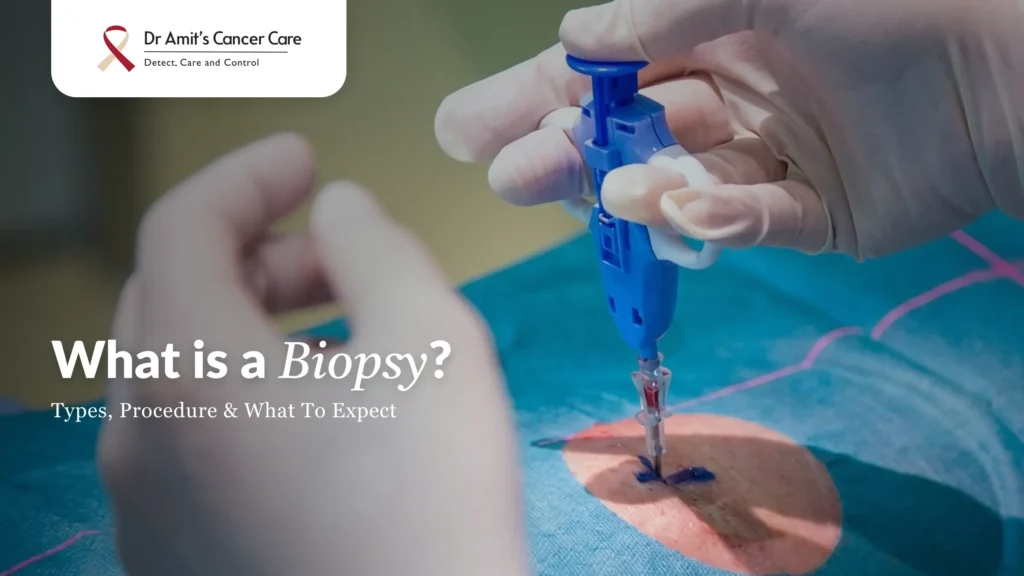
What is a biopsy? It is a small test where your doctor takes a tiny sample of tissue to understand what is really happening inside your body. That’s all. It doesn’t decide your future. It explains it.
The biopsy meaning is often misunderstood. Many people assume it confirms the worst. In reality, it brings clarity. It tells your doctor whether a change is harmless, early-stage, or something that needs timely treatment.
Think of it as switching on a light in a dark room. You stop guessing. You start knowing.
In modern cancer care, especially in head and neck conditions, precision matters from the very first step. A carefully done biopsy helps plan treatment that not only targets the disease but also protects how you speak, swallow, and live day to day .
That’s why understanding what is a biopsy is not just medical, it’s empowering.
What Is a Biopsy? Clear Definition and Purpose
A biopsy definition is simple: it is a medical test where a small piece of tissue is taken from the body and examined under a microscope. That sample holds answers that scans alone cannot provide.
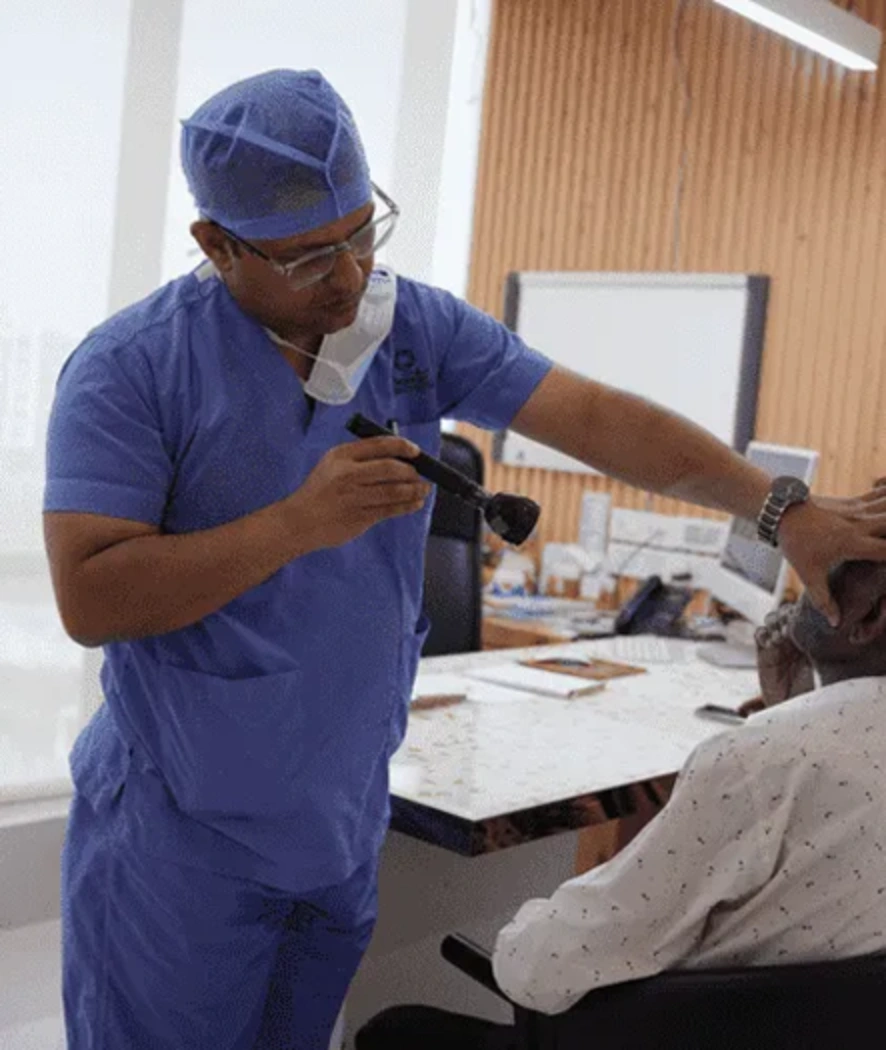
Here’s what really happens. Your doctor identifies an area that looks unusual. A small sample is carefully removed. This sample is then studied by a specialist called a pathologist, someone trained to read cellular patterns and spot early changes that are not visible on imaging.
So, why biopsy is done comes down to three clear goals:
- Confirm – Is it cancer or something non-cancerous?
- Classify – If it is cancer, what type is it?
- Characterise – How fast is it likely to grow or spread?
This clarity shapes everything that follows.
In simple terms, a biopsy helps your doctor:
- Make a precise diagnosis, not an assumption
- Decide the right treatment path
- Avoid unnecessary or overly aggressive procedures
Scans like CT or MRI show structure. A biopsy shows behavior. That difference matters.
In expert cancer care, these results are not reviewed in isolation. A team of specialists studies them together to ensure every detail is understood before planning treatment.
Biopsy Types Used in Head & Neck Cancer Diagnosis
The type of biopsy depends on where the concern is and what your doctor needs to see clearly. Not every situation calls for the same approach. The goal is simply to get the right tissue, from the right spot, with the least disruption to your body.
A. Fine Needle Aspiration (FNA)
This is one of the most commonly used biopsy types. A thin needle is used to draw out cells from areas like the thyroid, lymph nodes, or parotid gland. It’s quick. You’re usually in and out within minutes. Most people describe it as mildly uncomfortable, not painful. And yes, it’s often done in the outpatient setting.
B. Core Needle Biopsy
When doctors need more than just cells when they need to study how those cells are arranged they choose a needle biopsy with a slightly thicker needle. This gives a clearer picture, especially in complex or deeper neck lumps.
C. Incisional / Punch Biopsy
For visible areas like the tongue, inner cheek, or gums, a small piece of tissue is removed directly. It’s precise. Targeted. And gives a definitive answer when surface lesions raise concern.
D. Endoscopic Biopsy
For regions you can’t see directly like the throat or voice box a thin camera guides the process. The sample is taken with accuracy, without large cuts.
E. Image-Guided Biopsy
Sometimes, the challenge isn’t access to its accuracy. Using ultrasound (USG) or CT, doctors pinpoint the exact area that looks suspicious. This improves the reliability of the biopsy test and reduces chances of missing the diagnosis.
Quick Comparison
| Type | Where Used | Key Benefit |
| FNA | Thyroid, lymph nodes | Fast, minimal discomfort |
| Core Needle | Deep neck lumps | Better tissue detail |
| Incisional/Punch | Oral lesions | Direct, precise sampling |
| Endoscopic | Throat, larynx | Access without open surgery |
| Image-Guided | Hard-to-locate areas | High accuracy |
Each method has a purpose. Choosing the right one makes all the difference in getting a clear, reliable diagnosis.
How Is a Biopsy Done? Step-by-Step Process
If you’re wondering how is a biopsy done, it helps to see it as a short, structured process not something overwhelming.
A. Before the Biopsy
It usually starts with a simple conversation.
Your doctor reviews your medical history, current symptoms, and any scans you’ve already had.
In some cases, a few basic blood tests are advised. Fasting is rarely needed but if it is, you’ll be told clearly in advance.
There’s no rush.You know what’s happening, and why.
B. During the Procedure
Most biopsies are done under local anesthesia.
That means the area is numbered and you stay awake, but comfortable.
Once the area is prepared, the sample is taken.
This can take anywhere from a few minutes to about 15–20 minutes, depending on the location.
For deeper or less visible areas, imaging like ultrasound or CT helps guide the needle or instrument with precision. This ensures the right spot is sampled the first time.
Care is taken to protect nearby structures especially those linked to speech and swallowing.
That focus matters, particularly in head and neck cases.
C. After the Biopsy
You may notice slight soreness or mild swelling. Nothing that typically stops you from getting back to your day.
Most people return to routine activities the same day.
You’ll also get clear instructions on care, just to keep things smooth.
Biopsy Results: What They Mean for Your Treatment
The biopsy is done. Now comes the part most people find hardest i.e. waiting.
When your report arrives, it doesn’t just say “yes” or “no.” It tells a deeper story.
First, it answers a basic question:
Is the tissue normal or abnormal?
If abnormal, the next layer is clarity benign or malignant. Benign means non-cancerous. Malignant means cancer is present.
But the real value lies beyond that.
The report helps define the type of cancer, how the cells behave, and how aggressive they appear. This is what doctors use to understand the stage and plan the next step.
Most reports are ready within 3 to 7 days. It can feel like a long wait, but this time is used to study the sample carefully because small details matter.
These findings directly shape your treatment path.
They help decide whether surgery is needed, how extensive it should be, and whether you’re a candidate for minimally invasive or robotic approaches that protect speech, swallowing, and appearance.
In simple terms, the biopsy result turns uncertainty into a clear, focused plan.
Why an Accurate Biopsy Matters More Than You Think
A biopsy may look like a small step. In reality, it sets the direction for everything that follows.
If the sample misses the right area, the report may not reflect the true nature of the disease. That can lead to delays, repeat procedures, or a treatment plan that doesn’t fully address the problem.
When the biopsy is precise, decisions become clearer. Your doctor knows what they are treating, how aggressive it is, and what approach will protect both health and function.
This is where technique matters. Image guidance, careful targeting, and specialist review all play a role.
Accurate staging also determines whether you are suited for minimally invasive or robotic surgery—approaches designed to treat the disease while preserving speech, swallowing, and appearance
Choosing the Right Team for Your Biopsy and Treatment
Not all biopsies are equal. The team behind it makes a real difference both in diagnosis and what comes next.
Here’s what to look for:
- Focused experience in head & neck cancers
These areas are complex. You want someone who works with these conditions every day, not occasionally. - Access to imaging-guided biopsy
Tools like ultrasound or CT help target the exact area that needs testing. This improves accuracy from the start. - A team-based review of results
Surgeons, oncologists, and radiation specialists looking at your case together means fewer blind spots. - Care that protects function
Speech, swallowing, and facial balance matter. The right team plans with these in mind not as an afterthought.
A careful start often leads to better decisions later.
A Biopsy Is Not the End. It’s the Starting Point
A biopsy can feel like a heavy moment. But in reality, it brings something most patients are searching for clarity.
It turns doubt into direction. It replaces guesswork with facts.
And those facts shape every next step. The right diagnosis guides the right treatment plan, one that focuses not just on removing disease, but on preserving how you speak, swallow, and live.
If you found this article helpful, consider sharing it with family members, friends, or colleagues. A simple conversation or shared resource can help get clarity early.
If you have any further questions feel free to reach us. at +91 – 86577 17988 An early conversation is always best when it comes to our health matters.


 Nov 21, 2024