
Imagine waking up every day feeling like your body’s main battery is permanently drained, no matter how many hours you sleep. For anyone navigating life after thyroid surgery or managing an underactive gland, this profound exhaustion is a daily reality because the body has lost its natural spark plug.
When your body can no longer produce these vital hormones on its own, modern medicine provides a simple and effective solution. It is a daily routine that replicates exactly what nature intended. If you have recently had a thyroidectomy, completed radioiodine treatment, or received a diagnosis of an underactive thyroid, this information directly concerns your daily well-being.
Let’s look closely at what is thyroid hormone replacement therapy, how it works, and how it helps you regain control of your health.
What Is Thyroid Hormone Replacement Therapy?
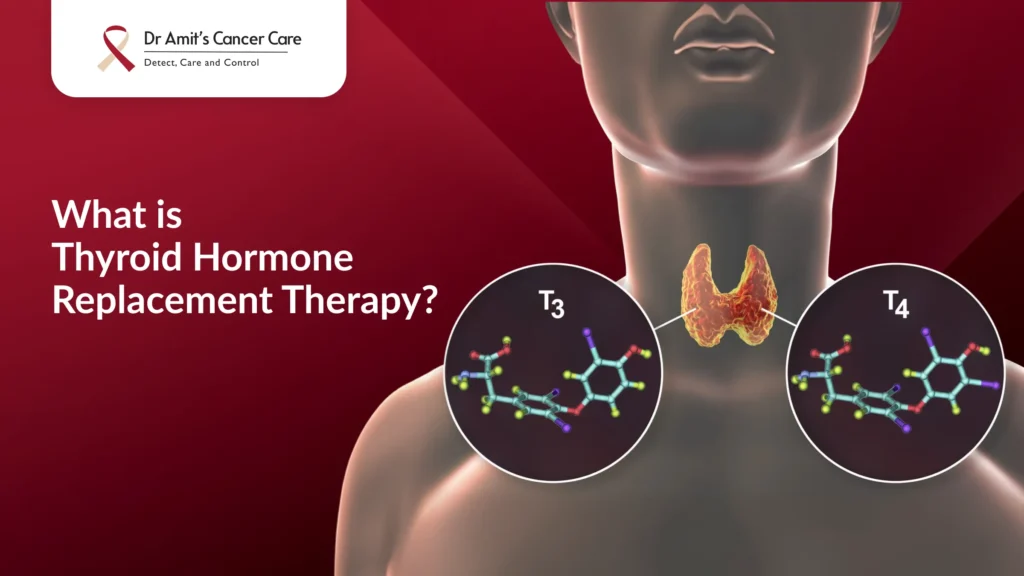
To easily grasp what thyroid hormone replacement therapy is, it helps to understand what the thyroid gland actually does. Situated at the base of your neck, this butterfly-shaped organ acts as your body’s central control panel for energy. It takes iodine from your food and converts it into two primary hormones: thyroxine (T4) and triiodothyronine (T3). These hormones travel through your bloodstream to tell every single cell in your body how fast to work.
When your thyroid is removed by a surgeon or slowed down by an illness, your metabolism drops to a grinding halt. You might experience profound exhaustion, unexplained weight gain, constant coldness, and brain fog.
This is where thyroid hormone therapy comes into play. It is a lifelong medication regimen where you take a daily, synthetic version of the thyroid hormone, most commonly a small pill called levothyroxine (synthetic T4). Once swallowed, your body treats this medication exactly like the hormone your natural thyroid used to make, safely restoring your body’s chemical balance.
The Dual Purpose: Hypothyroidism vs. Cancer Care
While the medication used is often identical, doctors prescribe thyroid hormone replacement therapy for two very different clinical reasons.
1. Simple Replacement for Hypothyroidism
For patients with a naturally underactive thyroid (Hashimoto’s disease) or those who have had their gland removed for benign nodules, the goal is purely restorative. The medical team calculates a precise dosage to replace what is missing, bringing your blood hormone levels back into a perfectly normal, healthy range.
2. Hormone Therapy for Thyroid Cancer
When it comes to oncology, the strategy shifts significantly. If you are undergoing hormone therapy for thyroid cancer after a total thyroidectomy, the medication serves a powerful, dual purpose.
- Replacing the Hormone: First, it keeps you alive and energetic by replacing the hormone your missing gland can no longer produce.
- TSH Suppression (The Cancer Shield): Second, doctors intentionally give you a slightly higher dose than normal to keep your thyroid-stimulating hormone (TSH) levels exceptionally low.
Why do doctors do this procedure?
TSH is a hormone produced by your brain’s pituitary gland that commands thyroid cells to grow and multiply. If any microscopic thyroid cancer cells survived your surgery or radioactive iodine therapy, a normal level of TSH could cause those cancer cells to grow back.
By taking a higher dose of synthetic hormone, your brain thinks the body has plenty of thyroid hormone and stops producing TSH entirely. Starving the area of TSH acts as a protective shield, drastically lowering the chance of cancer recurrence.
What Are The Benefits Of Thyroid Hormone Replacement Therapy?
When your dosage is correctly balanced by a specialist, like Dr Amit Chakroborty, the benefits of thyroid hormone replacement therapy can feel life-changing. Because the thyroid controls your entire metabolic rate, stabilising these levels can help resolve issues throughout your body.
Restored Energy Levels
The constant, heavy fatigue and morning sluggishness disappear as your cells finally get the signal to produce energy normally again.
Weight Management Support
A sluggish thyroid slows down your calorie-burning engine. Normalising your levels helps your body process food more efficiently, making it easier to manage your weight.
Mental Clarity and Mood Stability
The frustrating “brain fog”, memory lapses, and unexplained mood dips or mild depression associated with an underactive thyroid generally lift.
Healthy Skin, Hair, and Nails
Hypothyroidism often causes dry, cracking skin and brittle hair. Proper hormone replacement brings back natural moisture and prevents premature hair thinning.
Understanding the Financial Side: Thyroid Hormone Replacement Therapy Cost
A common and practical question many patients ask is, “What is the financial commitment or cost for this lifelong treatment?”
Fortunately, the baseline thyroid hormone replacement therapy cost is remarkably low compared to most long-term medical regimens. Standard synthetic T4 (levothyroxine) is a widely available generic drug. In most regions, a standard monthly prescription costs roughly the equivalent of a few cups of coffee.
However, when evaluating the total thyroid hormone replacement therapy cost, you must look beyond the price of the pills alone. The overall investment includes:
- Routine Blood Tests: During your first year, you will need frequent thyroid-stimulating hormone (TSH) and free T4 blood tests every 6 to 8 weeks to fine-tune your exact dose.
- Specialist Consultations: Regular check-ins with your endocrinologist or surgical oncologist ensure your body is responding perfectly to the treatment.
For cancer patients undergoing TSH suppression, these follow-up tests are vital to ensure the dose remains high enough to suppress the cancer risks, but safe enough to protect your heart and bones from long-term strain.
Doctor Amit’s Note: Finding the right thyroid hormone dose is a precise science, not a matter of guesswork. If you experience lingering symptoms like heart palpitations, sudden anxiety, or extreme fatigue that lasts for more than two weeks while on your medication, do not simply wait. See your doctor for a simple blood check to adjust your dosage safely.
How to Correctly Take Your Medication
To get the full benefits of thyroid hormone replacement therapy, you need to take it consistently. Levothyroxine is a sensitive medication that is easily blocked by food and other supplements in your stomach.
To ensure your body absorbs 100% of the dose, follow these simple guidelines:
Take it on an empty stomach
Take your pill first thing in the morning with a full glass of water, at least 30 to 60 minutes before eating breakfast or drinking coffee.
Watch out for calcium and iron
Avoid taking multivitamins, iron supplements, or calcium carbonate tablets within 4 hours of your thyroid pill, as these minerals bind to the hormone and wash it right out of your system.
Stick to the same routine
Take your medication at the exact same time every single day to maintain a steady, smooth level of the hormone in your bloodstream.
The Bottom Line
Understanding what is thyroid hormone therapy removes the fear of a post-surgery lifestyle. Whether you need hormone therapy for thyroid cancer to keep hidden cells from returning or simple thyroid hormone replacement therapy to boost a sluggish metabolism, this tiny daily pill is your bridge back to a vibrant, healthy life.
Every patient’s metabolism is uniquely their own, so your path to the perfect dose requires personalised care and expert monitoring. If you are preparing for a thyroid procedure or need assistance managing your post-operative recovery, explore the supportive guides available on Dr Amit’s Cancer Care Blogs and book a helpful consultation today.


 May 04, 2026